A Change of Guard

សូមស្តាប់វិទ្យុសង្គ្រោះជាតិ Please read more Khmer news and listen to CNRP Radio at National Rescue Party. សូមស្តាប់វីទ្យុខ្មែរប៉ុស្តិ៍/Khmer Post Radio.
Follow Khmerization on Facebook/តាមដានខ្មែរូបនីយកម្មតាម Facebook: https://www.facebook.com/khmerization.khmerican

Monday, 30 January 2012

Westec launches movie magazine in Cambodia


By Ou Mom
Friday, 27 January 2012
The Phnom Penh Post

Westec Media, the company behind Cambodia’s first international movie theatre Legend Cinema, is further endearing itself to local cinephiles by launching movie magazine Jai Kon.

The dual language magazine will be released every two months in English and Khmer, and features articles on the local movie industry, as well as reviews on the latest flicks coming to the Kingdom.

A 48-page issue ‘zero’ was released last month as something of a test balloon, but Westec promises that issue one, to be published this week, will have roughly 100 pages of content.

Simon Choo, distribution manager at Westec Media, said that the magazine will be a boon for local filmmakers.

“Jai Kon can feature different directors showing different ways of making movies and telling stories, so that local producers can learn from it,” he said.

Issue zero contains articles about Russian-American action flick The Darkest Hour, an interview with Khmer movie star Tep Rindaro, an interview with a teenage animator, and a wrap-up of the Cambodian Film Festival.

And on a page sure to grab the interest of local media mavens, the mag also provides detailed information on the local box-office hauls for foreign movies.

According to Jai Kon, as of November 30 last year, Transformers 3: Dark of the Moon had earned $78,189 over 11 weeks at Legend Cinema. Final Destination 5, the second biggest earner, garnered $59,630 over seven weeks. At the bottom of the list, which displays 25 movies, was the Glee 3D Concert, which earned $2,703 in two weeks.

Loy Te, editor of Jai Kon, said that the magazine will provide a variety of content about both international and local movie news.

Sin Sisamouth- Chamrieng Moranak/Klong Khaek Haek Lok (A Song of Death)

Another song: Sin Sisamouth and Ros Serey Sothea- Chamrieng Tum Teav (The Song for Tum Teav Girl)

CPP claims 46 of 57 seats up for grabs in Senate election [The ruling CPP only made 1 seat gain, while the opposition SRP made 10 seats gain]

Election officials held a press conference to announce the election results.

Published: 29-Jan-12
PHNOM PENH (Cambodia Herald) - The ruling Cambodian People's Party (CPP) won 78.1 percent of the vote in Cambodia's Senate elections on Sunday with the opposition Sam Rainsy Party (SRP) getting about 21.99 percent, according to preliminary results announced by the National Election Committee (NEC).

The CPP announced separately that it had won 46 of the 57 seats up for grabs in the indirect election which was limited to less than 12,000 local councillors and national lawmakers. The SRP said it expected to win 11 seats. Two of the other four seats are appointed by the king and the other two are elected by the National Assembly.

Both parties said they were satisfied with the election environment.

Ok Kim An, an official at CPP headquarters, said: "The number of votes for the CPP rose in every province even though the increase varied from one province to another."

Yim Sovan, the SRP spokesman, noted that his party had only two seats in the outgoing Senate.

The CPP and SRP were the only two parties to field candidates in the election for the Senate, the third since the upper house was established to resolve a political crisis that followed elections for the National Assembly in 1998.

The ruing party held a majority of almost two thirds in the outgoing senate with 45 seats. Funcinpec, the royalist party which has since split but still governs in a nominal coalition with the CPP, had 21 seats including two voted by the National Assembly. Since it didn't field candidates in Sunday's election, both the CPP and SRP expected to gain.

The preliminary results Sunday showed the CPP winning 8,880 votes of the 11,412 valid votes counted with the SRP getting 2,503 votes, the NEC said. A spokesman said some of the completed ballots were invalid.

Voter turnout among the those eligible to cast ballots was 99.6 percent. The NEC said 46 of the the eligible 11,470 members of Commune Councils and the National Assembly did not vote.

After voting closed at 3 p.m., the NEC said the elections had been held in a safe and secure environment.

Cambodia is scheduled to hold commune elections in June ahead of national parliamentary elections in 2013.

Cambodian ruling party secures expected victory in Senate elections closed to general public [SRP scored a big win, jumping from 2 to 11 seats]

Election officials announcing the senatorial election results.

By Associated Press,

The Washington Post

PHNOM PENH, Cambodia —Cambodian Prime Minister Hun Sen’s party secured an expected victory at Senate elections Sunday, according to preliminary results following the vote that was closed to the general population and criticized for lacking credibility.

The ruling Cambodian People’s Party won almost 78 percent of votes (44.3 seats), while the opposition Sam Rainsy Party won almost 22 percent (12.54 seats), Election Commission chairman Im Suosdey told reporters. Official results were expected Feb. 4.

The 61-seat Senate has no power to amend or veto legislation and is widely seen as an ineffectual body that rubber-stamps bills from the lower house, or National Assembly, which the ruling party dominates.

The National Assembly and some 11,300 local officials vote to fill 57 of the Senate seats. Two of the seats are appointed by King Norodom Sihamoni and two by the lower house.

Local monitoring groups have denounced the Senate elections, saying they do not reflect the will of the people and that a sweep by Hun Sen’s party is a foregone conclusion, given its dominance in the lower house.

In the last Senate election in 2006, the ruling Cambodian People’s Party won 45 seats, followed by the royalist Funcinpec party with 10. Two seats went to the opposition Sam Rainsy Party.

Cambodia's ruling party wins majority in Senate race: preliminary results (opposition SRP impressive win, winning 11 seats, a great jump from 2 seats)

Election officials, Im Suorsdei (R) and Tep Nytha (middle) announcing the senatorial election results.

PHNOM PENH, Jan. 29 (Xinhua) -- The ruling Cambodian People's Party (CPP) gained a majority in the Senate elections on Sunday, receiving up to 77.81 percent (or 44.3 seats) out of the total 57 seats, according to the preliminary results of the National Election Committee (NEC).

Sam Rainsy Party, which is the country's main opposition party, gained the remaining 21.93 percent (or 12.5 seats), it said.

"In general, the elections had been conducted with security and good safety," Im Suosdey, the NEC's President, said during the announcement of the preliminary results on Sunday afternoon.

The official results will be announced on Feb. 4 if there is no complaint from any political parties, but it will be postponed to March 5 if there is complaint, according to the NEC.

The Sunday's Senate elections were observed by 131 representatives of political parties, 1,432 national and international observers and 200 local and foreign journalists, according to the NEC.

Only two main political parties participated in the elections. They are the ruling Cambodian People's Party (CPP) and Sam Rainsy Party.

It was voted by 119 Members of Parliament and 11,351 commune councilors at 33 polling stations across the country.

Cambodia's Senate has 61 seats, but the election was held for only 57 seats as two senators will be appointed by the King and the other two by the National Assembly.

The Senate election is held every six years. The last one was in January 2006, at that time, three parties -- Cambodian People' s Party, royalist Funcinpec and Sam Rainsy Party -- joined the contest. As a result, the CPP won 45 seats, the Funcinpec 10 seats and the Sam Rainsy party two seats.
Editor: Zhang Xiang

[Australia's] Donvale father sees Cambodia on a bike

Donvale's Gary Connor will handcycle through Cambodia this year. Picture: ANDY DREWITT N30DT307

30 Jan 12, 2012
The Manningham Leader
By Anna Prytz

A DONVALE father who lost the use of his legs 24 years ago will handcycle through Cambodia to raise awareness of disabled sports.

Gary Connor, who became a paraplegic after a workplace accident in 1988, will lead a group of 16 cyclists of all abilities on an eight-day tour in June for health-promoting organisation Disability Sport and Recreation.

Mr Connor, who led his first tour in Vietnam last year, said he became an ambassador for the organisation to demonstrate that people with disabilities were capable of anything.

លទ្ធិប្រជាធិបតេយ្យសម័យដៃចោរ ហ៊ុន សែន Democracy Under Hun Xen´s Regime by Koy Decho

Sunday, 29 January 2012

The opposition SRP poised to win 11 senate seats

The opposition Sam Rainsy Party (SRP) predicted it is poised to win 11 senate seats, out of the 61-seat senate. If the prediction is right, it would a big win for the SRP, which currently holds only two senate seats.

The SRP claimed that as at 5pm Sunday afternoon, the senate election result is as follow:
1. Region 1 (Phnom Penh), the SRP won 2 seats, the ruling CPP won 4 seats.
2. Region 2 (Kampong Cham), SRP won 2 seats, CPP 6.
3. Region 3 (Kandal), SRP= 1 seat, CPP=4.
4. Region 4 (Battambang, Siem Reap, Banteay Meanchey. Oddar Meanchey, Pailin), SRP=2, CPP=8.
5. Region 5 (Takeo, Kampot, Kep), SRP=1, CPP=6.
6. Region 6 (Prey Veng, Svay Rieng), SRP=1, CPP=6.
7. Region 7 (Kampong Speu, Kampong Chhnang, Koh Kong, Sihanoukville), SRP=1, CPP=7.
8. Region 8 (Kampong thom, Preah Vihear, Stung Treng, Kratie, Rattanakiri, Mondulkiri, SRP=1, CPP=5.)

*If there is no change in the final result, the SRP should have won 11 seats and the CPP won 46 seats. 2 seats will be appointed by the king and the other 2 will be appointed by the parliament.

The 2012 preliminary senate election results

មកដល់ពេលនេះគណបក្ស សមរង្ស៊ី ទទួលបានតាមមណ្ឌលភូមិភាគ ៖

មណ្ឌលភូមិភាគទី១ រាជធានីភ្នំពេញ គណបក្ស សម រង្ស៊ី ទទួលបាន ២ អាសនៈ គណបក្ស ប្រជាជន ទទួលបាន ៤ អាសនៈ

មណ្ឌលភូមិភាគទី២ ខេត្តកំពង់ចាម គណបក្ស សម រង្ស៊ី ទទួលបាន ២ អាសនៈ គណបក្ស ប្រជាជន ទទួលបាន ៦ អាសនៈ

មណ្ឌលភូមិភាគទី៦ ខេត្តព្រៃវែង និងខេត្តស្វាយរៀង គណបក្ស សម រង្ស៊ី ទទួលបាន ១ អាសនៈ គណបក្ស ប្រជាជន ទទួលបាន ៦ អាសនៈ

មណ្ឌលភូមិភាគទី៧ ខេត្តកំពង់ស្ពឺ ខេត្តកំពង់ឆ្នាំង ខេត្តពោធិសាត់ ខេត្តព្រះសីហនុ និងខេត្តកោះកុង គណបក្ស សម រង្ស៊ី ទទួលបាន ១ អាសនៈ គណបក្ស ប្រជាជន ទទួលបាន ៦ អាសនៈ
--------
Preliminary results:

Region 1 (Phnom Penh): The SRP won 2 seats, the CPP won 4 seats.

Region 2 (Kampong Cham): The SRP won 2 seats, the CPP won 6 seats.

Region 6 (Prey Veng and Svay Rieng): The SRP won 1 seat, the CPP 6.

Region 7 (Kampong Speu, Kampong Chhnang, Pursat, Preah Sihanouk, Koh Kong): The SRP won 1 seat, the CPP 6.

The 2012 senate preliminary election results

លទ្ធផលជាបណ្តោះអាសន្ន នៃការបោះឆ្នោតជ្រើសតាំង សមាជិកព្រឹទ្ធសភានីតិកាលទី៣ នៅ១២ រាជធានី ខេត្ត CPP នាំមុខដាច់
Sunday, 29 January 2012 17:22 ដោយៈ ស៊ន សុភក្ត្រ-Posted: ID-009
E-mail Print PDF

ភ្នំពេញៈ លទ្ធផលនៃការបោះឆ្នោតជាបណ្តោះអាសន្ន នៃការជ្រើសតាំងសមាជិកព្រឹទ្ធសភានីតិកាលទី៣ សម្រាប់រាជធានីខេត្ត ចំនួន១២ បានបញ្ជាក់ថា គណបក្សប្រជាជនបាននាំមុខដាច់គណបក្សសមរង្ស៊ី។

មន្រ្តីជាន់ខ្ពស់រាជរដ្ឋាភិបាលបានឲ្យដឹងថា រាជធានីភ្នំពេញ គណបក្សប្រជាជន បានទទួលសំឡេងកើនឡើង២១សំឡេង រីឯបក្សសមរង្ស៊ី បាត់១៧សំឡេង។

ខេត្តពោធិ៍សាត់គណបក្សប្រជាជនកើន២៦សំឡេង សមរង្ស៊ីបាត់១០សំឡេង។

ខេត្តកោះកុង គណបក្សប្រជាជន កើនឡើង៨សំឡេង សមរង្ស៊ីបាត់១សំឡេង។

ខេត្តកែប គណបក្សប្រជាជនកើនឡើង១សំឡេង។

លទ្ធផលជាបណ្តោះអាសន្ន នៃការបោះឆ្នោតជ្រើសតាំង សមាជិកព្រឹទ្ធសភានីតិកាលទី៣ នៅ១២ រាជធានី ខេត្ត CPP នាំមុខដាច់

E-mail Print PDF

ភ្នំពេញៈ លទ្ធផលនៃការបោះឆ្នោតជាបណ្តោះអាសន្ន នៃការជ្រើសតាំងសមាជិកព្រឹទ្ធសភានីតិកាលទី៣ សម្រាប់រាជធានីខេត្ត ចំនួន១២ បានបញ្ជាក់ថា គណបក្សប្រជាជនបាននាំមុខដាច់គណបក្សសមរង្ស៊ី។

មន្រ្តីជាន់ខ្ពស់រាជរដ្ឋាភិបាលបានឲ្យដឹងថា រាជធានីភ្នំពេញ គណបក្សប្រជាជន បានទទួលសំឡេងកើនឡើង២១សំឡេង រីឯបក្សសមរង្ស៊ី បាត់១៧សំឡេង។

ខេត្តពោធិ៍សាត់គណបក្សប្រជាជនកើន២៦សំឡេង សមរង្ស៊ីបាត់១០សំឡេង។

ខេត្តកោះកុង គណបក្សប្រជាជន កើនឡើង៨សំឡេង សមរង្ស៊ីបាត់១សំឡេង។

ខេត្តកែប គណបក្សប្រជាជនកើនឡើង១សំឡេង។

ខេត្តរតនគិរី គណបក្សប្រជាជនកើនឡើង៥សំឡេង សមរង្ស៊ីបាត់១សំឡេង។

ខេត្តព្រៃវែង គណបក្សប្រជាជនកើនឡើង៧០សំឡេង គណបក្សសមរង្ស៊ីបាត់១១សំឡេង។

ខេត្តកំពង់ចាម គណបក្សប្រជាជនកើនឡើង១២៩សំឡេង គណបក្សសមរង្ស៊ីបាត់៤២សំឡេង។

ខេត្តព្រះសីហនុ គណបក្សប្រជាជនកើនឡើង៥សំឡេង គណបក្សសមរង្ស៊ីបាត់១សំឡេង។

ខេត្តប៉ៃលិន គណបក្សប្រជាជនកើនឡើង១សំឡេង ។

ខេត្តមណ្ឌលគិរី គណបក្សប្រជាជនកើនឡើង១សំឡេង។

ខេត្តបាត់ដំបង គណបក្សប្រជាជនកើនឡើង២៦សំឡេង គណបក្សសមរង្ស៊ីបាត់៤សំឡេង។

ខេត្តកំពង់ឆ្នាំង គណបក្សប្រជាជនកើនឡើង៤៧សំឡេង គណបក្សសមរង្ស៊ីបាត់២សំឡេង។

រហូតដល់ម៉ោង៥ និង២០នាទីល្ងាចថ្ងៃអាទិត្យ ទី២៩ ខែមករានេះ គ.ជ.ប មិនទាន់បានប្រកាសលទ្ធផល បណ្តោះអាសន្នទូទាំងប្រទេសនៅឡើយទេ។

Senate election kicks off in Cambodia

Voters in Battambang look for their names on the electoral list.

Published: 29-Jan-12

PHNOM PENH (Cambodia Herald) – Cambodia kicked off voting in Senate elections Sunday with the ruling Cambodian People's Party (CPP) and opposition Sam Rainsy Party (SRP) competing for 57 of the 61 seats in the upper house.

Among the four remaining seats, two will be appointed by the king and the other two elected by the National Assembly, the lower house of parliament.

Of 11,470 voters eligible to cast ballots, 11,351 are Commune Council members elected in 2007 and 119 are National Assembly members elected in 2008.

Prime Minister Hun Sen cast his vote in Kandal province near Phnom Penh. Heng Samrin, president of the National Assembly, and Kim Sokha, president of the Human Rights Party, cast their ballots in the eastern province of Kompong Cham.

Exiled opposition leader Sam Rainsy, believed to be in France, was unable to vote.

Unlike the National Assembly and Commune Councils which have five-year terms, the Senate has six-year terms. In the outgoing second Senate, the CPP controled 45 of the 61 seats. Funcincpec had 12, of which 2 were elected by the National Assembly and the SRP had 2 seats. In the first Senate, the CPP controled 31 Seats, Funcinpec 21 seats, the SRP 7 seats.

The Senate was initiated by former King Norodom Sihanouk to break a political deadlock after National Assembly elections in 1998.

Brinkley: A North Korean thaw? [Don't write Kim Jong-un off yet, just look at Sihanouk!]


Jan 28, 2012
By Joel Brinkley
MetroWest Daily News

Like Kim, Sihanouk was educated abroad – France in his case – allowing him to see how the Western world lived. Kim spent two years, 1998-2000, at school in Switzerland. Well, 12 years after Sihanouk’s coronation, he instigated an uprising that won Cambodia’s freedom from France after almost 100 years of occupation.
Don’t give up on Kim Jong-un, the cherubic naif who is North Korea’s new supreme leader.

For weeks now, North Korea’s establishment has been prostrating itself at his feet, while prosecuting a frenzied campaign to show his people that this young man with the chubby cheeks is a god-like leader, just like his father and grandfather before him. A few days ago, the state’s official media improbably credited him with presiding over North Korea’s nuclear-weapons tests, which began in 2006 – when Kim was about 21 years old.

Don’t be fooled. All of this is for their benefit, not Kim’s.

All of those generals and government apparatchiks want to preserve the privileged lifestyle that allows them to dine on Big Macs flown in from China, smoke well-aged Cuban cigars and sip Hennessy cognac. United Nations and South Korean government figures show that these luxury-item imports and many others – automobiles, iPads and air conditioners, all from China – have doubled in the last year, in direct violation of U.N. sanctions.

An exceedingly tiny percentage of North Koreans live in this opulent cocoon, while millions of others subsist on grass and tree bark. But the lucky few are determined to preserve their gilded lives. And the best way to do that is to enshrine the next generation of the Kim dynasty, which has ruled North Korea since the 1940s.

But Kim reminds me of Norodom Sihanouk, the former boy-king of another poor Asian state, Cambodia. He was crowned in 1941, while France occupied his country. The French overseers chose Sihanouk, who was 19 years old, because they felt sure the naive teenager would be compliant. Certainly the North Korean oligarchy is hoping the same of Kim right now.

Like Kim, Sihanouk was educated abroad – France in his case – allowing him to see how the Western world lived. Kim spent two years, 1998-2000, at school in Switzerland.

Well, 12 years after Sihanouk’s coronation, he instigated an uprising that won Cambodia’s freedom from France after almost 100 years of occupation.

Already, even in his first few days in office, Kim has offered indications that he may not preside over business as usual. North Korea watchers had predicted an unprovoked attack on South Korea — an oft-used tactic to show that North Korea’s military should be taken seriously, even under new leadership. Nothing happened. Instead the state announced it would release prisoners, the first general amnesty in seven years. And then, for the first time, it agreed to allow a Western news agency, the Associated Press, to open an office in Pyongyang.

Also this month, North Korea told Washington it would freeze uranium enrichment for nuclear weapons if the United States offered “confidence-building” measures, such as increased food aid. That offer may prove meaningless, as so many similar proposals have in the past. But the state hadn’t agreed to anything quite like that before.

Still, we can’t know what’s in Kim’s head. In 2010, his father plucked him from virtual invisibility and made him a four-star general, though he doesn’t appear to have served in the military, even for a day. Instantly that made him the heir apparent — impossible to approach, difficult to read as the establishment began its authorship of the Kim Jung-un hagiography.

Today, however, Kim can’t help but see what’s happening in a nearby state, Burma — until now, the second-most reclusive state in Asia after his own. With a few tentative steps to open the state, the Western world is embracing, even extolling Burma’s government. Secretary of State Hillary Clinton visited. This month, the U.S. restored full diplomatic relations and invited Burma to send an ambassador to Washington.

That’s the sort of recognition North Korea covets more than most anything else. It’s no coincidence that Kim’s first approach to a Western state was his message to Washington offering to freeze enrichment.

Right now, Kim’s tutors are still marching him through his choreographed coronation. They’ve posed him sitting as tall as he can on a white horse, standing on a bluff lecturing his generals while wagging a finger in their faces, climbing out of a tank and touring an army base while state-run television called him “a military genius” – even though he is so young that the government is embarrassed to release his age (probably 27).

North Korea wants attention and recognition more than anything else. Hard as it may be, particularly during an election year, once Kim’s dramaturgy is over, Washington should find a way to reach out. There may never be a better time.

Joel Brinkley, a professor of journalism at Stanford University, is a former foreign correspondent for the New York Times.

Senate election kicks off in Cambodia

PHNOM PENH, Jan. 29, 2012 (Xinhua) -- The election for the third legislature of Cambodian Senate has begun on Sunday morning with two main political parties participating in the contest.

The two parties are the ruling Cambodian People's Party (CPP) and Sam Rainsy Party, the country's main opposition party, according to the National Election Committee (NEC).

Prime Minister Hun Sen casted his ballot near his residence in Takhmau district, Kandal province, about 10 km south of the capital.

The Senate election is voted by 119 Members of Parliament and 11,351 commune councilors at 33 polling stations across the country, it added.

Cambodia's Senate has 61 seats, but the election is held for 57 seats as two senators will be appointed by the King and the other 2 by the National Assembly.

The results will be announced Sunday afternoon.

The Senate election is held every six years. The last one was in Jan. 2006, at that time, three parties -- CPP, Funcinpec and Sam Rainsy Party -- joined the contest. As a result, the CPP won 45 seats, Funcinpec 10 seats and the Sam Rainsy Party 2 seats.
Editor: en_hl

Cambodia holds Senate elections; most can't vote

Cambodian Prime Minister Hun Sen shows off his inked finger after casting his ballot in Senate elections in Ta Khmau, Kandal province, central Cambodia, Sunday, Jan. 29, 2012. Hun Sen's party was expected to sweep Senate elections in a vote that is closed to the general population and criticized for lacking credibility. ((AP Photo/Heng Sinith))

Posted: 01/29/2012
The Associated Press
The Denver Post

PHNOM PENH, Cambodia—Cambodian Prime Minister Hun Sen's party is expected to sweep Senate elections in a vote that is closed to the general population and criticized for lacking credibility.

The country's 61-member upper house of Parliament is being chosen Sunday by local officials and members of the National Assembly, or lower house. Two seats are appointed by King Norodom Sihamoni and two by the National Assembly.

In the last Senate election in 2006, the ruling Cambodian People's Party won 45 seats, followed by the royalist Funcinpec party with 10. Two seats went to the opposition Sam Rainsy Party.

The Senate has no power to amend or veto legislation and is widely seen as an ineffectual body that rubber-stamps bills from the lower house, which the ruling party dominates.

Two More Uyghurs Get Life Sentences

Top row: Three of the four Uyghurs sentenced to life imprisonment, from left, Mutellip Mamut, Nurahmet Kudret and Islam Urayim. Bottom row: Ilyar Hamut (jailed for 20 years), Musa Muhamad (17 years), Helil Abdugheni (16 years) and Abduqadir Abdugheni (16 years).

More details emerge on the Uyghur asylum seekers deported to China by Cambodia.

27th January, 2012
Radio Free Asia

Chinese authorities have sent another two Uyghurs to life imprisonment after Cambodia deported them to China, family members and lawyers said Friday, as more details emerged regarding 21 Uyghur asylum seekers who were forcibly sent home.

News of the sentence came a day after it was reported that two Uyghurs from the same group had been ordered to spend the rest of their life in prison in punishments meted out in secret and described as severe by rights groups.

The four and 12 others, who were ordered jail up to 20 months, faced charges of splittism, terrorism and illegal travel.

The Uyghurs from China’s volatile Xinjiang region had fled to Cambodia more than two years ago and sought asylum in the Southeast Asian state following ethnic riots involving the minority Uyghurs and majority Han Chinese in the region's capital Urumqi in July 2009.

Some rights groups say the Uyghurs were fleeing persecution because they had witnessed Chinese security forces arresting and using lethal force against Uyghur demonstrators during the riots.

Families and lawyers of the deported Uyghurs who spoke to RFA could only identify three of the four who were sentenced to life imprisonment—Mutellip Mamut, Nurahmet Kudret and Islam Urayim.

Among the others in the group—four were sent to 20 years in jail, four received 17 years imprisonment, and another four received 16-year sentences.

The sentences took effect on September 2011 after swift verdicts handed out in a trial conducted on Dec. 24, 2010 and then confirmed by China's top court, legal sources said.

The fate of two more Uyghurs who were detained after deportation to China was not known amid concerns by rights groups over their whereabouts as at least one of them has serious health problems.

Three others from the deported group—a woman and two children—were released.

Interviews

Details on the fate of the 21 surfaced only this week when RFA began interviewing families and lawyers in Xinjiang even though the Uyghurs were deported on Dec. 19, 2009.

Lawyers hired by some of the Uyghurs indicated that the trials were conducted without the presence of their immediate families or relatives and that the accused were brought in and taken out of the court with their faces covered.

The lawyers themselves were prevented from fully defending their clients.

Lawyer Tunisa Hesen, whose client Memettursun Omer was given a 20-year sentence, said that she could not divulge what was discussed in the trial.

Hesen, 55, who works for a local government department dealing in legal issues, said that her department drafted her court remarks one day before the trial, implying that she was not allowed to represent her client effectively.

"We are not allowed to say, 'He is not guilty' in such state security cases," said another lawyer Nasirjan, 32, a lecturer at the Kashgar Pedagogical University and whose client Helil Abdugheni got a 16-year jail sentence.

Families of the clients expressed dissatisfaction over the conduct of the two lawyers, saying they were paid adequate fees but did not provide them with any key information.

Unlike Hesen and Nasirjan, who were hired by their clients, the Uyghurs who received life sentences had lawyers appointed by the court, according to legal sources.

Families of the Uyghurs said more than 10 families went to the court to attend the trial but were not allowed to witness the proceedings.

"The courtyard was blocked and they stayed on outside and waited until the proceedings ended," one family member, speaking on condition of anonymity, said. "They were not able to see their loved ones."

Persecution

Uyghurs, who form a distinct, Turkic-speaking minority in Xinjiang, say they are subjected to political control and persecution for opposing Chinese rule in their homeland. Beijing says some Uyghurs belonged to militant groups allied with Al-Qaeda and operating in Xinjiang.

Uyghur exile groups criticized the Chinese authorities for consistently refusing to provide information on the whereabouts and legal status of the jailed Uyghurs.

They said that Beijing had assured the international community that the deported Uyghurs would be dealt with transparently upon their return.

The U.S. State Department expressed concern Friday over the sentences that were imposed on the deported Uyghurs.

We're seeking to confirm these reports with the Chinese," State Department spokeswoman Victoria Nuland told reporters.

Washington "has repeatedly called on the Chinese government to provide information on the whereabouts of all 20 of the Uyghur asylum seekers," Nuland said.

It has also asked Beijing "to allow access to them by international agencies and to treat them in accordance with international human rights obligations and commitments," Nuland said.

The World Uyghur Congress (WUC) said that Uyghurs forcibly returned to China "are in extreme risk of torture, detention and enforced disappearance."

The Uyghurs had fled to Cambodia in small groups between May and October 2009 and had applied to the United Nations High Commissioner for Refugees (UNHCR) for refugee status in Phnom Penh.

Reported by Shohret Hoshur for RFA's Uyghur service. Translated by Shohret Hoshur. Written in English by Parameswaran Ponnudurai.

China/Islamophobia: Silencing Uighur Muslims

Kadeer, one of the exiled leaders of the Uighurs, speak to protesters.

By IINA
January 28, 2012
Posted in: Islamophobia

BEIJING, 5 Rabi al-Awwal/28 Jan (IINA)-Rights groups have condemned China life sentences against two Uighur Muslims for unknown crimes after being deported from Cambodia where they had requested asylum, Reuters reported recently.

“The imprisonment of these men, who were forcefully deported from a place of refuge, should serve as a wake-up call to the world about the brutal treatment awaiting Uighur asylum seekers who are sent back to China,” Uighur American Association president Alim Seytoff said in a statement posted on the advocacy group’s website.

Back in December 2009, 18 Muslim Uighurs, seeking asylum in Cambodia, were deported upon request from China after the Cambodian government ignored objections from the United States and international rights groups.

Following trials ‘shrouded in secrecy’, a court in the far western region of Xinjiang sentenced Nurahmet Kudret, 35, and Islam Urayim, 32, to life in prison, relatives of the men told the Uighur American Association and US-based Radio Free Asia.

The men were serving their sentences at separate prisons in the regional capital, Urumqi, after they were convicted of unknown crimes, the broadcaster said.

The third man, Musa Muhamad, 25, was sentenced to 17 years in October by a court in Xinjiang’s Kashgar city, it said.

The three men were among a group of about 20 who had sought asylum in Cambodia following ethic riots between Uighurs and majority Han Chinese in Xinjiang’s capital of Urumqi in July 2009.

Citing rights groups, Radio Free Asia said the asylum-seekers had fled persecution because they had witnessed Chinese security forces arresting and using lethal force against Uighur demonstrators during July 2009 riots.

Xinjiang’s capital, Urumqi, was the scene of deadly violence in July 2009 when the mainly Muslim Uighur minority vented resentment over Chinese restrictions in the region.

In the following days, mobs of angry Han took to the streets looking for revenge in the worst ethnic violence that China had seen in decades.

The unrest left nearly 200 dead and 1,700 injured, according to government figures. But Uighurs, a Turkic-speaking Muslim minority, say the toll was much higher and mainly from their community.

China’s authorities have convicted about 200 people, mostly Uighurs, over the riots and sentenced 26 of them to death.

The life imprisonment sentences revived human rights groups rebuke for China for its long arm punishment for Uighur asylum seekers.

“The Uighurs in Cambodia were sent back to the very repression they were attempting to flee,” said Alim Seytoff, the president of the Uighur American Association.

“We cannot allow the long arm of Chinese pressure to govern the treatment of Uighur asylum seekers in other countries,” Seytoff said.

The Munich-based exile World Uyghur Congress said that China has refused to confirm the whereabouts of members of the group, referring to media reports that said four were sentenced to death after their return, while another 14 were jailed for life.

“Uighurs forcibly returned to China are in extreme risk of torture, detention and enforced disappearance,” Rebiya Kadeer, president of the, said in a statement emailed to Agence France Presse (AFP).

“We call once again on international governments to pressure the Chinese authorities to immediately disclose the whereabouts of all the extradited Uighurs and to provide the charges, if any, that have been made against them.”

China and Cambodia have long kept close relations, with China giving large amounts of aid to the impoverished Southeast Asian nation.

Two days after Cambodia deported the Muslim Uighurs in December 2009, Chinese Vice President Xi visited Phnom Penh and signed 14 trade deals worth $850 million.

The Cambodian government denied that the deportation was linked to China’s later announcement of a loan of 1.2 billion dollars.

The Munich-based World Uighur Congress last year said Asian nations had repatriated at least 180 Uighurs to China since 2001.

Xinjiang and its Uighur Muslims, a Turkish-speaking minority of more than eight million, continue to be the subject of massive security crackdowns.

Muslims accuses the government of settling millions of ethnic Han in their territory with the ultimate goal of obliterating its identity and culture.

Beijing views the vast region as an invaluable asset because of its crucial strategic location near Central Asia and its large oil and gas reserves.

Photographing Cambodia’s ancient Ta Prohm Temple, before the tourists arrive

Photo: David Cummings/Special to The Star

By David Cummings
Special to The Anniston Star
Jan 29, 2012

“Was that a big cat?” my wife, Lesa, asked as we walked down the dark path.

“I hope not,” I replied.

We were using our cellphones as flashlights as we walked toward Ta Prohm Temple in Cambodia last November. It was a half-hour before sunrise, and we could hear cicadas and monkeys in the dense jungle.

Our driver had dropped us at the temple’s entrance road and had quickly left for the journey back to Siem Reap, the area’s hub of tourism. We hoped he didn’t know something about wild animals that we didn’t. We wished we had thought of flashlights.

There were no lights within miles. Jungle noises were the only sensory input as we shuffled along in the dark.

For a year, we had been looking forward to seeing the many temples in the area around Angkor Wat. There are as many as a hundred temple complexes in 70 square miles.

Some are as many as 1,000 years old. The jungle has reclaimed many of them.

They are the largest religious sites in the world, and have languished in mystery until just recently. Tourism has brought people to these great sites for only the last decade or so, because Cambodia has had terrible times with civil war and the regime of Pol Pot’s Communist government.

Millions of land mines had to be cleared before it was even safe to walk in this area. Each year, more Western tourists come to discover these sites as they are being reclaimed from the jungle overgrowth.

Lesa and I wanted to photograph these places before the inevitable tourist infrastructure ruined it forever. We had gotten to Russia about 10 years too late. The pyramids of Egypt are surrounded by souvenir sellers that ruin the experience. Even the rural areas around the Great Wall of China don’t seem real because of the parking lots and handrails that have been added. We desperately wanted to find a Real Place that wasn’t totally screwed up by the tourist hordes.

I was hoping that these Cambodian temples would be a good addition to my lifelong series of photographs of holy places around the world. Lesa just wanted to be away from home so we could do something fun together while she tried out her new camera.

We decided to get up at 4 a.m. each day we were there, and be at different temples as the first light gave details to the scene. We had seen the dozens of tourist buses around the hotels, and we knew what that would mean by around 9 a.m. Our only hope was to get there first.

Lesa stopped in a clearing. “Is this it?” she asked.

As we stood peering into the gloom, we could gradually see walls of gray stone, and tall trees seemingly growing out of the walls themselves.

We stood transfixed as the temple took form in the growing light.

Within 15 minutes, we were working. I went to the inner-courtyard and found some wonderful views.

Lesa set up her tripod near the tall strangler fig tree that Angelina Jolie walked past in that awful Tomb Raider movie.

Two hours later, we found each other on the far side of the complex, each with stories to tell about what great scenes we shot and how the other’s pictures just couldn’t measure up.

Lesa got great photos of the trees growing out of the walls and detail shots of fallen leaves on the stones. She showed the age of the carvings that had been exposed to the elements for hundreds of years without people knowing they were there.

I tried to show the structures in the context of being ancient places of worship, with the jungle overgrowth adding incredible visual complication to the scene. I moved around trying to get the early-morning light to rake across these stones in the same way that makes the gothic cathedrals of Europe so dramatic.

By 9 a.m., everything changed. We lost the total silence that we’d had. People came by the hundreds. Busloads of Chinese tourists climbed on the stones and took each other’s photos. Laughter and excitement filled the area. Dozens of people were in each part of the temple. Nobody could take a photograph without other folks in shorts and hats climbing around and being in the way.

The sun was overhead by now, and the scene had too much contrast to shoot. Shadows were too dark, and highlights were too light. Photos taken now would just look like everybody else’s snapshots.

Lesa and I sat on a rock and watched for a while, knowing our shooting day was over. We still had time to go back to the hotel during breakfast hours. We actually had tears of joy in our eyes. For just a short while, we had “owned” one of the last Real Places in the world.

David Cummings has traveled as far afield as Antarctica, camera in hand. When he’s not traveling, he runs a dental practice in Anniston.

Cambodian ruling party poised to sweep Senate elections; few can vote, body has little power

( Heng Sinith / Associated Press ) - Cambodia residents line up at a polling station in Ta Khmau town in Kandal province, some 15 kilometers (9 miles) south of Phnom Penh, Cambodia, Sunday, Jan. 29, 2012. Cambodia Prime Minister Hun Sen’s party was expected to sweep Senate elections Sunday in a vote that is closed to the general population and criticized for lacking credibility.

By Associated Press,

PHNOM PENH, Cambodia — Cambodian Prime Minister Hun Sen’s party is expected to sweep Senate elections in a vote that is closed to the general population and criticized for lacking credibility.

The country’s 61-member upper house of Parliament is being chosen Sunday by local officials and members of the National Assembly, or lower house. Two seats are appointed by King Norodom Sihamoni and two by the National Assembly.

In the last Senate election in 2006, the ruling Cambodian People’s Party won 45 seats, followed by the royalist Funcinpec party with 10. Two seats went to the opposition Sam Rainsy Party.

The Senate has no power to amend or veto legislation and is widely seen as an ineffectual body that rubber-stamps bills from the lower house, which the ruling party dominates.

Sin Sisamouth and Ros Serey Sothea- Chamrieng Tum Teav (The Song for Tum Teav Girl)

Another song: Sin Sisamouth -Lamorm Hoey Na Srey (Enough is Enough, Girl!)

Cambodian gangs get concession to fell trees inside Thailand?

DSI claims illegal logging rampant

CAMBODIAN GANGS GET 'VIRTUAL CONCESSIONS' TO FELL PHAYUNG TREES

Published: 29/01/2012
Writer: King-Oua Laohong, Sermpong Thongsamrit & Apinya Wipatayotin
Bangkok Post

Wildlife officials, including a national park chief, have been accused of helping Cambodian gangs to fell phayung [Kro-nhoung in Khmer] trees in protected forests for export to China.

The Department of Special Investigation claims the officials were virtually "awarding Cambodians a concession to cut the trees" in a national park near Phanom Dong Rak Wildlife Sanctuary in Si Sa Ket province.

Pol Maj Suriya Singhakamon, chief of the DSI's consumer protection office, claimed the illegal logging was aided by some soldiers and police officers turning a blind eye to Cambodians illegally entering Thai forests. They allowed them to take the phayung [Kro-nhoung], also known as Siamese rosewood, out of the country.

Pol Maj Suriya said about 1,000 Cambodians equipped with chainsaws were cutting phayung "every day".

The DSI was told of the extent of the illegal logging during the questioning of 30 wildlife and forestry officials.

"Even phayung trees growing beside a national park office were cut," he said, although officials have told the DSI they had no knowledge of it.

The rampant felling of phayung trees has left Thailand with one last tract of the precious wood in Phuchong-Nayoi National Park in Ubon Ratchathani province, Pol Maj Suriya said.

The wood, liked by furniture makers for its hardness and patterns, is allegedly being snapped up by a Chinese businessman, he said.

Damrong Pidech, chief of the National Parks, Wildlife and Plant Conservation Department, has transferred implicated officers from the area to allow for further DSI investigations, Pol Maj Suriya said.

Mr Damrong yesterday insisted none of his officials is involved in the illegal trade in either the national park or the wildlife sanctuary.

"I think the information that the DSI has obtained might refer to a former national park staff member who I have already transferred. I believe the new chiefs have nothing to do with the case," Mr Damrong said. He rejected DSI claims that 1,000 Cambodians regularly entered Thailand to fell phayung trees, saying that national parks staff patrolled areas containing phayung trees.

He said staff from other national parks were deployed to patrol tracts of phayung trees in Phujong-Nayoi National Park and Phanom Dongrak Wildlife Sanctuary to prevent illegal timber felling. But he admitted the measures were inadequate because of a lack of government funding.

Meanwhile, authorities yesterday found 29 phayung logs hidden in a pond in Si Sa Ket's Kantharalak district worth more than 12 million baht.

តុលាការ​​បារាំង​​ស៊ើប​អង្កេត​ករណី​គប់​គ្រាប់​បែក​ឆ្នាំ​១៩៩៧ ​ឡើង​វិញ


(RFA/Sok Serey: ៣០-មីនា-២០១០: អ្នក​ចូល​រួម​ពិធី​រំឭក​ខួប​​១៣​​ឆ្នាំ​នៃ​ព្រឹត្តិការណ៍​គប់​គ្រាប់​បែក​ទៅ​លើ​ហ្វូង​បាតុករ​នៅ​ខាង​មុខ​សភា ក្នុង​រាជធានី​ភ្នំពេញ កាល​ពី​ថ្ងៃ​៣០ ខែ​មីនា ឆ្នាំ​១៩៩៧ ឈរ​មើល​រូបថត​ឯកសារ​នៃ​ជន​រងគ្រោះ។)
2012-01-28
បើ​ទោះ​បី​ជា​ករណី​គប់​គ្រាប់​បែក​ដៃ​ទៅ​លើ​ហ្វូង​បាតុករ​មុខ​រដ្ឋ​សភា កាល​ពី​ឆ្នាំ​១៩៩៧ បាន​កប់​ទុក​ជា​យូរ​មក​ហើយ​ក៏​ដោយ ក៏​សហគមន៍​អន្តរជាតិ​នៅ​មិន​ទាន់​បោះបង់ និង​ព្រងើយ​កន្តើយ​ចំពោះ​ករណី​នេះ​ដដែល។
លោក សម រង្ស៊ី ប្រធាន​គណបក្ស​ជំទាស់​ដែល​កំពុង​រស់​នៅ​និរទេស​ក្នុង​ប្រទេស​បារាំង គេច​ពី​ការ​តាម​ចាប់​ខ្លួន​របស់​រដ្ឋាភិបាល​កម្ពុជា បាន​ប្រកាស​ឲ្យ​ដឹង​ថា តុលាការ​ទីក្រុង​ប៉ារីស កាល​ពី​ថ្ងៃ​ទី​២៤ ខែ​មករា កន្លង​ទៅ បាន​សម្រេច​បើក​ការ​ស៊ើប​អង្កេត​ឡើង​វិញ ចំពោះ​ព្រឹត្តិការណ៍​គប់​គ្រាប់​បែក​ទៅ​លើ​ក្រុម​បាតុករ​មុខ​រដ្ឋ​សភា កាល​ពី​ថ្ងៃ​ទី​៣០ ខែ​មីនា ឆ្នាំ​១៩៩៧។ 
លោក សម រង្ស៊ី៖ «មេធាវី​ខ្ញុំ​នៅ​ប្រទេស​បារាំង បាន​ផ្ដល់​ព័ត៌មាន​ឲ្យ​ខ្ញុំ​ថា អយ្យការ​សាធារណរដ្ឋ​បារាំង ដែល​តំណាង​ឲ្យ​តុលាការ​បារាំង បាន​ធ្វើ​សេចក្ដី​សម្រេច​ថា ឥឡូវ​ត្រូវ​តែ​ស៊ើប​អង្កេត​ឡើង​វិញ យក​សំណុំ​រឿង​ការ​គប់​គ្រាប់​បែក ដែល​ខ្ញុំ​បាន​ចោទ​លោក ហ៊ុន សែន នៅ​ពី​ក្រោយ​ការ​គប់​គ្រាប់​បែក​មុខ​រដ្ឋ​សភា។ ខ្ញុំ​នៅ​តែ​ចោទ​បញ្ហា​នេះ​ដដែល​ថា លោក ហ៊ុន សែន នៅ​ពី​ក្រោយ​ការ​គប់​គ្រាប់បែក​កាល​ពី​ថ្ងៃ​ទី​៣០ ខែ​មីនា ឆ្នាំ​១៩៩៧ ហើយ​មាន​ភស្តុតាង​មាន​អី​មួយ​ចំនួន​ហើយ ដែល​ធ្វើ​ឲ្យ​អ្នក​សង្កេតការណ៍​ឯករាជ្យ​ដែល​គេ​សង្ស័យ ហើយ​គេ​ចោទ​លោក ហ៊ុន សែន។ អ៊ីចឹង​តុលាការ​បារាំង ក៏​គេ​យល់​ឃើញ​អ៊ីចឹង​ដែរ​ថា រឿង​នេះ​ច្បាស់​ជា​មាន​អ្នក​មាន​អំណាច​នៅ​ពី​ក្រោយ​ហើយ បាន​អាច​ធ្វើ​អ៊ីចឹង​បាន»

Saturday, 28 January 2012

SRP says French prosecutors to investigate 1997 grenade attack in Phnom Penh

Sam Rainsy, leader of the opposition Sam Rainsy Party, who was injured in the grenade attack in 1997.

Published: 28-Jan-12
PHNOM PENH (Cambodia Herald)- French prosecutors plan to investigate a grenade attack in front of National Assembly in 1997 which left 20 people dead, according to the opposition Sam Rainsy Party.

The party said the French court could summon Prime Minister Hun Sen and other senior officials to appear if it had enough evidence from America's Federal Bureau of Investigation (FBI), which carried out its own investigation at the time.

Senior government officials did not comment on the announcement, which was made Friday.

Opposition Leader Sam Rainsy's message before the Senate Election

Dear colleagues,

I am sending you a small audio file (MP3) with this email. On January 28, please make all the 2,660 SRP commune councilors in all provinces LISTEN to this audio. It is my final appeal to them with MY VOICE.
The audio recording lasts only 5 minutes. You can download it from any computer and/or record it on any audio cassette. You may play this audio several times throughout the day at in each meeting place.

Thank you.

Click on the control below to listen to opposition leader Sam Rainsy's message:

Commune councillor form the ruling CPP fined for vote-buying


Press Statement
28 January, 2012

Today, Battambang Provincial Election Committee fines Cheam Pe A, an official of the Cambodian People's Party (CPP) the equivalent of US$1,250 for vote buying. The complaint was filed by the Sam Rainsy Party, the lead opposition party in Cambodia, on 21 January, 2012.

The Sam Rainsy Party considers Mr. Mok Ra, one of SRP 2,662 elected councilors who will cast their votes on 29 January senatorial election, a true fighter for democracy and a hero. He never intended to sell his conscience. He took the risk of meeting with the CPP officials with the intention of bringing evidence to support the SRP complaint.

The Cambodian People's Party was fined in previous elections for vote buying.Vote buying is an electoral fraud, it is illegal according to the Cambodian electoral law. Universally vote buying is morally unacceptable and a grave violation of the principles of democracy. It brings dishonor to the party found guilty.

We must seriously and openly condemn vote buying as it leads to the establishment of a one-party system and to dictatorship.

SRP will continue to commit itself to free, fair and clean elections as it is one of the first steps towards building true democracy.

SRP Cabinet

Three Cambodian Children Rescued


The Pattaya People
Click for video

On Thursday evening, a team of officials from the Human Trafficking Prevention & Suppression Center of Chonburi, -

led by its Director Mr. Pasisorn Noja, police from the Children and Women Rights Protection Department led by its Deputy Superintendent Pol. Lt. Col. Greeta Taan-ka-na-raat and officials from the Gra-joek Ngao Shelter, managed to arrest Mrs. Hiang, aged 32, behind the Made In Thailand Market on 2nd Pattaya’s 2nd Road. She was arrested for forcing 3 children that she claimed to be hers to beg for money. Furthermore, the oldest daughter has been offered for sale to many foreigners on the beach. The children are a 14-year-old girl, a 10-year-old boy and a 1 year 3 month-old baby.

The name of their step father was reported as Mr. Jaan, aged around 45 - 50 who is still wanted, as he has been reported as offering the 14 year-girl for sale for 80,000 Baht. Fortunately, several good samaritan foreigners sent complaints to the police of this abuse.

The children were sent to a Children’s Shelter, and further investigations will be made, starting with finding out if Mrs. Hiang is their mother at all.

Jack Nicklaus sees golf business growing in Cambodia this year

Published: 28-Jan-12

PHNOM PENH (Cambodia Herald)- The golf industry is expected to grow in Cambodia this year, legendary American golfer and golf-course designer Jack Nicklaus reportedly told the Golf Channel.

The television channel's website said that Nicklaus made the comment during an interview at the three-day PGA Merchandise Show which opened in Orlando, Florida on Tuesday.

"Nicklaus anticipates that in 2012, the United States will not see a lot of growth in any sector of the golf business but that some emerging nations like South Korea, China, Brazil, Russia, Argentina, Cambodia and Malaysia will see growth in a number of sectors in the golf industry. The United States will recover but it will take some time," it said.

Nicklaus Design, the Florida-based company owned by the Nicklaus family, has designed 350 golf courses in 34 countries including the Grand Phnom Penh Gulf Club.

British company buys North American rights to Australian film shot in Cambodia


Published: 28-Jan-12

PHNOM PENH (Cambodia Herald)- British independent film and television distributor Entertainment One Ltd has acquired for an undisclosed sum the North American distribution rights to Wish You Were Here, the latest international film to be shot in Cambodia, according to the Hollywood Reporter.

The industry magazine's website said the Australian film was screened at the independent Sundance Film Festival last week and was expected to be released in theaters in the United States in autumn this year. Entertainment One will also release the film in Australia and New Zealand in 2012, the report said.

Wish You Were Here, the directorial debut of Kieran Darcy Smith, is about two Australian couples who go on a Cambodian holiday that ends in tragedy when one of the group mysteriously disappears.

The Sundance festival in Park City, Utah, opened on January 19 this year and is scheduled to end on Sunday.

“All the Missing Souls: A Personal History of the War Crimes Tribunals,” by David Scheffer

(Princeton University Press) - ’All the Missing Souls: A Personal History of the War Crimes Tribunals’ by David Scheffer

By Anthony Dworkin,
The Washington Post

The years from 1993 to 2001, when Bill Clinton occupied the White House, were the formative period in the contemporary development of international justice. Before then, there had been no international war crimes tribunals since the Nuremberg and Tokyo trials in the aftermath of World War II. By the end of this time, international courts were hearing cases on war crimes in the former Yugoslavia and Rwanda, negotiations on tribunals for Sierra Leone and Cambodia were far advanced, and the International Criminal Court was nearing its launch.

Throughout this time, David Scheffer was the Clinton administration’s point man on international justice. His book “All the Missing Souls” is a revealing and valuable record of the U.S. role in the effort to entrench accountability for mass atrocities as a central principle in international affairs.

During Clinton’s first term, Scheffer was senior adviser and counsel to Madeleine Albright, who was then ambassador to the United Nations. After Albright became secretary of state in 1997, Scheffer was appointed as the first U.S. ambassador for war crimes issues. The creation of this position testifies to the growing profile that the prevention and punishment of genocide, crimes against humanity and war crimes came to assume in U.S. foreign policy during the 1990s. But, as Scheffer shows in his detailed account, the process of getting the world’s great powers to make a real effort to enforce accountability for international crimes was anything but smooth.

The horrific violence unleashed against civilians in the former Yugoslavia and in Rwanda, combined with new expectations about an international role in policing war crimes after the Cold War, was enough to bring the U.N. Security Council to endorse the creation of war crimes tribunals for these countries. But this hardly amounted to a settled commitment to make international justice truly meaningful, either across the U.S. government or internationally. The launch of the Yugoslav tribunal was delayed for months as countries engaged in political horse-trading over the choice of a prosecutor. After a prosecutor was finally appointed, Scheffer had to fight doggedly within the Washington bureaucracy to persuade disdainful defense and intelligence officials to gather and deliver evidence to him. “Real men don’t do this,”one intelligence analyst told him.

Scheffer gives an instructive account of the political and diplomatic intricacies involved in transforming the tribunals from abstract ideals into effective institutions. Working to support an international court for Rwanda, the United States had a series of difficult negotiations with the country’s post-genocide, Tutsi-led government, which could not accept that the ringleaders of the genocide would not face the death penalty, or that the tribunal might also investigate the new rulers’ actions after seizing power. Later discussions with the Cambodian government over a court to prosecute mass killings by the Khmer Rouge regime in the 1970s were equally fraught, leading to an imperfect tribunal subject to Cambodian influence that Scheffer nevertheless defends as a blow against impunity.

In Bosnia, the work of the tribunal was handicapped by what Scheffer calls the “unbearable timidity” of the United States and its European allies in using their peacekeeping forces to track down and arrest indicted suspects. He is particularly scathing about the failure of French authorities to move against former Bosnian Serb leader Radovan Karadzic, who was thought to be in their sector. Finally, Scheffer suggests, French pressure may have led Albright to remove him from the effort to capture Karadzic.

Scheffer writes bluntly about the people he believes stood in the way of the tribunals’ success, displaying an assertive single-mindedness that probably equipped him well to push the cause of international justice in an administration where it was often seen as a low priority. At the same time, he criticizes himself for failing to recognize sooner that the genocide in Rwanda required a response outside the fixed procedures of normal policymaking.

Scheffer’s narrative treats each conflict separately, but two larger issues emerge from his account. First is the complexity of pursuing justice while also trying to bring an end to conflict, particularly when the United States and its allies are not willing or able to deploy a large number of forces to fight on the ground. Provisions on war crimes in the Dayton peace agreement that ended the Bosnian war were watered down to ensure a deal; Scheffer admits it would have been unrealistic to hope for a guarantee of full cooperation with the Yugoslav war crimes tribunal by all parties, but he still claims that the agreement could have gone further than it did. In Sierra Leone, he argues, an initially permissive approach to amnesties for war criminals only prolonged the conflict.

The second issue relates to the position of the United States as a country that has been at the forefront of efforts to prosecute war criminals internationally but bridles at any suggestion that an international tribunal could sit in judgment of its own citizens. The centerpiece of Scheffer’s book is a long and vivid account of the negotiations to set up a permanent International Criminal Court, in which he was forced by the administration to pursue a hopeless quest to ensure that the emerging court could never gain jurisdiction over any American suspect. “I appeared as the guardian of impunity rather than its slayer,”he writes. Although Clinton agreed to sign the court’s founding statute on the final day of his presidency, the United States has not ratified the statute and remains outside the court.

The ambivalent attitude of the world’s most powerful country to international justice, and the relationship between accountability and peace, remain unsettled questions today.

bookworld@washpost.com

Anthony Dworkin is a senior policy fellow at the European Council on Foreign Relations and was formerly the executive director of the Crimes of War Project.

ALL THE MISSING SOULS

A Personal History of the War Crimes Tribunals

By David Scheffer

Princeton Univ. 533 pp. $35

Self-development amid the temples in Cambodia

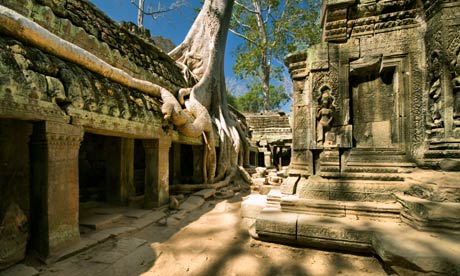
Top: Ta Prohm temple near Siem Reap, Cambodia. Photograph: Souvik Bhattacharya/Getty Images/Flickr RF

Middle: Kate in the waterfall Kate and guide Soriya in the River of a Thousand Lingas
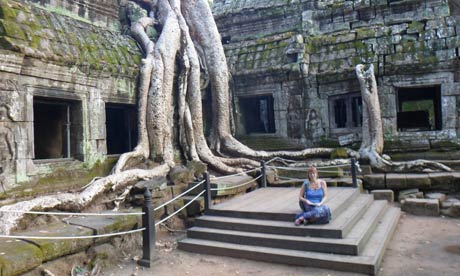
Bottom: Ta Prohm, Cambodia Writer Crysse Morrison at Ta Prohm temple. Photograph: Stuart Kempster

On a Cambodian trip that paired self-reflection with full-on sightseeing, the lesson turned out to be one of going with the flow

By Kate Edgley
guardian.co.uk,
Friday 27 January 2012

I was on the top of Phnom Kulen, the most sacred mountain in Cambodia, in my cozzy in the pouring rain. I was teetering at the edge of the River of a Thousand Lingas, next to a wide waterfall, being splashed by a group of women pilgrims who were sitting in the holy water in their saris, laughing. That was when Soriya, our fully dressed guide, grabbed my hand and, pulling me along behind, waded in, picking his way along the boulders until we were up against the heavy rush of the waterfall. "One, two, three …" said Soriya and into the pounding downflow we went. We stood a moment in the small gap on the other side against the rock catching our breath before emerging to applause, clicking cameras and laughter from the pilgrims.

There were so many aspects to that scenario I would never have expected, an example of the Buddhist belief in letting go of expectations and living in the moment. I had gone to Cambodia – where 85% of the population is Buddhist – to join a group of western pilgrims on an "exploration path" amid the temples and jungles. It was a group holiday involving life therapy, led by humanist psychologist and leadership coach Michael Eales and author Crysse Morrison, a trip that, for me, turned out to provide several opportunities for letting go of expectations.

Cambodia, one of the poorest countries in south-east Asia after decades of war, is so undeveloped that the great temples built during the Angkorian era (from the ninth to the 15th centuries) are surrounded by jungle. A spot of inner exploration amid this magical setting was, I felt sure, on its way, from alternative holiday champions Skyros – for whom "life-changing" and "transforming" are common testimonials.

"All journeys have secret destinations of which the traveller is unaware," said Michael, quoting the Jewish philosopher Martin Buber, and stoking my excitement for what lay ahead. A bus, for six long and bumpy hours the next morning, turned out to be the prosaic answer. And when we arrived in Battambang, a dip in the lovely rooftop pool of the Stung Sangke hotel (stungsangkehotel.com).

Our days began with the Skyros practice of demos (democracy), during which one of us would provide a thought for the day, and everyone was invited to express appreciation to someone or for something and to make suggestions for improvements. It kept the focus on what we were enjoying while providing a constructive way of dealing with niggles, and demonstrating that we – at least in our minds – create our own experiences.

Our experiences were many. The first excursion was to Phnom Sampeau, a hill with a dozen temples and much Khmer Rouge-induced bloodshed, 12km outside Battambang. Around 300 Cambodians died by being pushed off various parts of this steep outcrop, sometimes after having their throats slit first. A posse of children gathered around us as we climbed and then sat peering at our notebooks when we stopped to do a writing exercise, led by Crysse, who left her job as a lecturer and became a writer after a Skyros holiday 20 years ago. Afterwards we descended steps, the children sliding down the banister alongside us, into the Killing Cave, where a golden Buddha reclines alongside a glass memorial of skulls.

An energetic and uplifting Cirque du Soleil circus performance of skill and daring in Battambang that evening provided an entirely different kind of experience. The activities came thick and fast so I was glad when, after climbing 357 steps to Banon Temple, Michael introduced active listening, an exercise we performed in groups of four with each person talking uninterrupted about their thoughts and feelings while the other three listened. I sipped the juice from a coconut through a straw as we sat around a rickety table at a stall and each revealed a bit of ourselves.

The following day we were back in the bus and on to Siem Reap, via an archeological sight (which was closed), a sculptor (who was asleep) and a silk farm. The palatial 5-star Sokha Angkor (sokhahotels.com/siemreap), with a pool fed by pagoda-style waterfalls, was our luxurious home for the next four nights. Such magnificent quarters contrasted jarringly with the wooden shacks that most Cambodians call home, but the hotels we stayed in were at least locally owned, bringing desperately needed dollars into the economy.

Meals were mostly an array of shared stir-fried dishes, washed down with Angkor beer or French wine. Cheese and pastries are another legacy of France's colonial rule, but the food has a greater kinship with Thailand and Vietnam with servings of mixed vegetables – including the delicious morning glory (water spinach) – beef, or amok, the name a restaurant gives its own fish speciality.

Our first excursion from Siem Reap was the one everybody had been waiting for, to the magnificent Angkor Wat, the largest religious building in the world and a mind-blowing feat of engineering and devotion. To savour the moment that its spectacular western horizontal spread came into view, I had raced ahead of the group.

Unfortunately this meant I missed the explanation that we were, in fact, approaching from the opposite side and was confused and disappointed by my first sighting. Inside, humming with tourists, the trail took us around 800m of stunning bas-reliefs and past amazingly intact apsaras, or heavenly goddesses, carved into the stone. When I wasn't dodging the crowds, the sheer scale of the symmetry and the framed views of the jungle were breathtaking. There had been talk of lingering and writing but the bus was waiting to take us to lunch so I left Angkor Wat battling dissatisfaction with the fact that, like any other tourist, we had simply walked around it. We departed by the western approach so I waited until we were far enough away until I turned and there, in the centre of my vision … was green flapping tarpaulin! The secret destination of my Angkor Wat experience was, it seems, another lesson in expectation.

That evening, the haunting Ta Prohm, one of the temples just outside Siem Reap, where bizarre, monster-like spung trees and their roots have grown up, around and over the ruins, was blissfully tourist free.

Another moment of inner transportation came at Banteay Srei, the intricately carved women's temple, 30km from Siem Reap. As the day's light faded, we sat under a banyan tree in the grounds, where Michael began chanting with a powerful and haunting sound that the rest of us, sitting straight-backed and with our eyes closed, joined in. It lasted a few, perhaps five, minutes, and afterwards, as we walked away, I felt deeply peaceful and the jungle appeared suddenly vivid.

There was a visit to a well project, an apsara dance performance, and a rushed visit to Tuol Sleng, the prison where 17,000 were detained and tortured by the Khmer Rouge. It was a busy itinerary, involving many hours on the bus, which took in three of Cambodia's four main cities, temples galore and a good many sights beside. The journey, which began and ended in Phnom Penh, circumnavigated Tonlé Sap lake, the largest freshwater source in south-east Asia. It was a fascinating tour but lacked the stillness and reflection for the parallel internal journey that I had hoped for. Michael fed us thought-provoking quotes but the meditation, writing exercises and active listening came in snatched moments, providing an aside rather than underpinning an experience towards spiritual awakening.

"The mundane details of our life eat us up," said Michael, quoting Buddhist nun Ani Pema Chödrön. "Therefore it is important to keep asking ourselves again and again: what is the most important thing?" As it transpired, the most important thing was the outward journey, around a country of fascinating contrasts amid the remnants of one of the greatest empires the world has ever known. And as Cambodia emerges from centuries of invasion and poverty into the modern world, it was, perhaps, the perfect moment to visit. For that I feel grateful, which, as Buddhism teaches, is a very important step.

Brit teacher held for molesting kids in Cambodia

By ANTHONY FRANCE and EMILY NASH
http://www.thesun.co.uk
Published: Saturday 28th January, 2012

A RETIRED British teacher has been charged with molesting five young boys in Cambodia.

Reginald Blakeley, 70, is alleged to have preyed on children as young as seven.

He was held after investigators secretly filmed him approaching youngsters outside schools. One shot showed him with his arms draped round a lad of primary school age wearing a replica Manchester United shirt.

Eleven boys in the northern city of Siem Reap complained to cops about the pensioner's behaviour.

Doung Thavary, deputy bureau chief of the provincial anti-human trafficking police, said: "Five of them said he committed indecent acts on them."

Blakeley has visited Cambodia — a notorious haunt for Western paedophiles — five times since 2010. Child protection group Action Pour Les Enfants said it monitored him after claims of indecency.

Blakeley was filmed near children at a rice porridge stall outside two schools near the world-famous Angkor Wat temples. Investigators claimed Blakeley, who taught English at a local school, gave kids money.

APLE case officer Long Samnang alleged: "He would pretend to be playing with the children and start hugging them."

Blakeley, from Poole, Dorset, is in custody and faces trial at Siem Reap Provincial Court. He faces up to three years' jail and a £10,000 fine if convicted.

A relative said: "We hope and believe he is innocent and has just been tricked."

a.france@the-sun.co.uk

Sin Sisamouth -Lamorm Hoey Na Srey (Enough is Enough, Girl!)

Another song: Sin Sisamouth - Bopha Koh Keo (The Beautiful Girl of Koh Keo Island)

Land Evictions Reaching Tragic Proportions: Activist

Photo: VOA Khmer
Sia Phearum, executive-director of ​Housing Rights Task Force in Cambodia on "Hello VOA" Thursday.

Friday, 27 January 2012
Sok Khemara, VOA Khmer | Washington, DC

Government officials must take more action to prevent forced eviction, with more and more families ending up in inferior relocation sites and a high number of children dropping out of school as a result, a housing advocate said Thursday.
Sia Phearum, executive director of the Housing Rights Task Force, told “Hello VOA” people are being forced off land they earned through “backbreaking” work, and that promises made by politicians during the 2008 national election are going unfulfilled.

“If we continue tragedies like the issues of Borei Keila or Dey Krahorm, we will receive sin or remorse,” he said. “You as the authority, the government, from the vote of the people, you haven’t fulfilled your own task to solve the problem for them.”

He suggested clearer policies for proper compensation and fairness for people evicted under development projects, who often face difficulties once they leave their home neighborhoods for inferior sites outside the city.

As many as one in five children drop out of school after forced evictions, he said. Evictees go “from landowners to being servants,” he said. “That’s the direct impact for them, and that’s why we are seeing protests, like closed national roads, almost every month.”

Neth Ratana, a representative of villagers from Snuol district, Kratie province, where a rubber plantation is displacing hundreds of families, said she wants the government to find ways to share land.

Sorn Touch, a Borei Keila evictee who appeared on an earlier “Hello VOA,” said Thursday that officials have since threatened to sue her for defamation. “Now they want to imprison me,” she said.

Another Borei Keila evictee, Khan Malin, said at the relocation site, she must pay around $0.08 to use the toilet and $0.11 to take a shower. “When I don’t have the money, I just wash my feet and take my children to bed.”

Both women say they worry about their safety at night.

Sia Phearum said his group and other NGOs are not opposed to the government, but the tradeoffs for concessions and development are not worth it.

The nation’s leaders should take responsibility for the problem and not blame their subordinates, and they should not disappoint those who elected them, he said.

“The people who voted for these leaders need to think, too,” he said. “Because there is no rule of law, these companies associated with powerful leaders in the country are always forcing people out of their residences and arresting people and detaining those who dare to protest. The authorities were not voted in by the companies. They were seen as capable, and people voted for them to serve them, so they should serve the people.”

[U.S] Assistant Secretary Campbell Travel to the Republic of Korea, Vietnam, and Cambodia, January 30 - February 4, 2012


Media Note
Office of the Spokesperson
Washington, DC
January 27, 2012

Assistant Secretary of State for East Asian and Pacific Affairs Kurt Campbell (pictured) will travel to the Republic of Korea, Vietnam, and Cambodia January 30-February 4.

In Seoul, Republic of Korea, January 31-February 1, Assistant Secretary Campbell will meet with senior officials from the Ministry of Foreign Affairs and the Blue House. He will discuss a range of bilateral, regional, and global issues, including recent developments in North Korea.

Assistant Secretary Campbell will visit Hanoi, Vietnam, February 1-3, to meet with senior Vietnamese leaders to discuss bilateral and regional issues and seek progress on initiatives to deepen bilateral ties.

February 3-4, Assistant Secretary Campbell will visit Phnom Penh, Cambodia. While there, he will meet with senior Cambodian government officials to discuss areas of mutual interest, including Cambodia’s role as 2012 ASEAN chair, and to discuss ways to further strengthen our bilateral engagement.

Assistant Secretary Campbell returns to Washington, D.C., on February 4.