| Written by Kyle Sherer | |
| Thursday, 12 March 2009 Phnom Penh Post | |
| Siem Reap Far from the tourist centres, Compagnie des Elephants d'Angkor's Gavin Bourchier stands as guardian of Angkor's dwindling population of pachyderms.  Photo by: KYLE SHERER Gavin Bourchier, elephant manager, with Chitoeun, one of the elephants at Compagnie des Elephants d'Angkor. SIEM Reap is home to only 17 elephants, but that small number comprises almost a fifth of Cambodia's total number of domestic pachyderms, the second-largest provincial population after Mondulkiri. Unlike Phnom Penh's legendary elephant Sambo, who every day meanders down the Riverside strip entertaining tourists, Siem Reap's elephants' stomping ground does not include its bustling tourist centre; and Gavin Bourchier, elephant manager at Compagnie des Elephants d'Angkor, wants to keep it that way. "I've had phone calls," Bourchier told the Post. "‘Can we borrow a baby elephant and put a comical hat on it and make it do tricks?' I have a low opinion of the human race anyway, but I think people who like harmonica playing, hula hoop-spinning elephants ... well, it says a lot about the person." Bourchier oversees all of Siem Reap's remaining elephants, and under his regime the only interaction they have with tourists is giving rides near the temples, a "necessary evil" that provides funding. He acknowledges that Sambo "seems to have a fair deal", but doesn't want to do the same thing in Siem Reap because he's worried about escalation. "You start having elephants walk the street, you're one step away from the problems in Bangkok. It's best not to encourage it." Elephant exploitation for a quick tourist buck is just one of Bourchier's worries. Cambodian pachyderms are threatened by habitat loss, an aging population, poaching and, he said, the elephant in the room: a lack of trust and coordination between various NGOs and the Cambodian government. Unless that hurdle is cleared soon, Bourchier said, domestic elephants could vanish from the country altogether. "In 10 or 20 years, the number of domestic elephants will absolutely crash. Not decline, but plummet," he said. Aging problems His view is shared by Matt Maltby, project adviser at Fauna and Flora International who has recently put together a Cambodian domestic elephant census - the first nationwide survey conducted by one body. The results show that there are 102 domestic elephants left in the Kingdom, down from 160 five years ago. "Following current trends and an aging domestic population, there are likely to be none remaining in 10 or 15 years," he said. The reason for the decline is demographics. "There are 17 elephants in Siem Reap," Gavin said. "And their general condition is ‘aging'. Most elephants are getting old. If everything goes well, an elephant can live to around 70. ... The average age of an elephant in Cambodia is 46 to 48." Further, Bourchier said, "Reaching mid- to late-30s for females really knocks them on the head as far as breeding goes". Even when elephants become pregnant, there are still the formidable challenges in bringing them to birth and helping them raise offspring. Maternal behaviour in elephants is learned, not instinctive, and many domestic elephants do not have the experience to rear their young. Bourchier said one course of action that could rehabilitate the withering pachyderm population is by making a stud book compiling the age, gender and location of all domestic elephants in Cambodia, so that a comprehensive breeding program can be started. But he claims that his first attempt at compiling the list ended in failure. "It didn't come to fruition. That was four years ago." While the low domestic population of elephants makes the stud book a simple task on paper, the scattered populations of elephants, and the logistical difficulty involved in banding together disparate owners and NGOs, makes doing so highly intimidating. "It does require a great deal of cooperation to turn things around," Bourchier said. "But sorting out a stud book is realistic, as long as the cooperation is there." Maltby maintains the decline of domestic elephants isn't a death sentence for the species in Cambodia. But Bourchier believes the futures of both domestic and wild elephants are linked, and NGOs need to join forces to make a stud book before the domestic elephant disappears. |

Thursday, 12 March 2009
Siem Reap's elephant man


10 new ministers appointed
 Gen. Ke Kimyan talks to the press during a visit to his troops in Preah Vihear in late 2008.
Koh Santepheap newspaper
11th March, 2009
Reported in English by Khmerization
Ten new ministers will be appointed to the government positions in an extraordinary session of parliament to be held on 12th March, 2009. At the same time, the parliament will also vote to re-instate Mr. Sam Rainsy's parliamentary immunity which was lifted on 26th February, 2009 for failing to pay fines. Mr. Sam Rainsy paid the fines on the same day as when his immunity was lifted.
In a statement signed by Mr. Leng Peng Long, secretary-general of the National Assembly, the parliament announced the following nominations for appointments:
1. Gen. Ke Kimyan, the sacked Commander-in-Chief of the Royal Cambodian Armed Forces, will be appoimted as Deputy Prime Minister.
2. Mr. Serey Kosal, defector from the royalist Funcinpec Party, is to be appointed Senior Minister and Government Special Envoy.
3. Mr. Sourn Rachana, to be appointed Secretary of State for Public Works and Transportation, in place of Mr. Kep Thorn who had passed away.
4. Mr. Samraing Kamsan, to be appointed Secretary of State of Ministry of Culture and Fine Arts, in place of Mr. Khau Meng Heang who resigned on health reasons.
5. Mr. Hing Thoraksy, to be appointed Secretary of State at the Council of Ministers.
6. Mr. Tek Reth Samrech, to be appointed Secretary of State at the Council of Ministers.
7. Mr. Keo Remy, former vice-president of the Human Right Party, who defected to the CPP, to be appointed Secretary of State at the Council of Ministers.
8. Mr. Chhuon Dara,, to be appointed Secretary of State of Ministry of Commerce.
9. Mr. Ahmad Yahya, defector from the Sam Rainsy Party, to be appointed Secretary of State of Ministry of Social, Veteran and Youth Affairs.
10. Mr. Sam Satha, to be appointed Secretary of State at the Council of Ministers.
11th March, 2009
Reported in English by Khmerization
Ten new ministers will be appointed to the government positions in an extraordinary session of parliament to be held on 12th March, 2009. At the same time, the parliament will also vote to re-instate Mr. Sam Rainsy's parliamentary immunity which was lifted on 26th February, 2009 for failing to pay fines. Mr. Sam Rainsy paid the fines on the same day as when his immunity was lifted.
In a statement signed by Mr. Leng Peng Long, secretary-general of the National Assembly, the parliament announced the following nominations for appointments:
1. Gen. Ke Kimyan, the sacked Commander-in-Chief of the Royal Cambodian Armed Forces, will be appoimted as Deputy Prime Minister.
2. Mr. Serey Kosal, defector from the royalist Funcinpec Party, is to be appointed Senior Minister and Government Special Envoy.
3. Mr. Sourn Rachana, to be appointed Secretary of State for Public Works and Transportation, in place of Mr. Kep Thorn who had passed away.
4. Mr. Samraing Kamsan, to be appointed Secretary of State of Ministry of Culture and Fine Arts, in place of Mr. Khau Meng Heang who resigned on health reasons.
5. Mr. Hing Thoraksy, to be appointed Secretary of State at the Council of Ministers.
6. Mr. Tek Reth Samrech, to be appointed Secretary of State at the Council of Ministers.
7. Mr. Keo Remy, former vice-president of the Human Right Party, who defected to the CPP, to be appointed Secretary of State at the Council of Ministers.
8. Mr. Chhuon Dara,, to be appointed Secretary of State of Ministry of Commerce.
9. Mr. Ahmad Yahya, defector from the Sam Rainsy Party, to be appointed Secretary of State of Ministry of Social, Veteran and Youth Affairs.
10. Mr. Sam Satha, to be appointed Secretary of State at the Council of Ministers.
Opposition MP boycotts IPU conference after barred by security guards

Radio Free Asia
By Sary Rath
11th March, 2009
Reported in English by Khmerization
Ms. Mu Sochua (pictured), an opposition MP from the Sam Rainsy Party, has decided not to attend the Inter-Parliamentary Union (IPU) conference in Phnom Penh after the security guards barred her from entering the conference building in the first place.
Before departing on an overseas trip on Wednesday, she told of the reason why she boycotted the conference. She said: "If they dare to violate our rights like this, how can we continue to participate? For me, I considered that they have already refused my participation when the chief of the security banged the door shut in my face and told me that he does not know me and told me that I cannot enter the building."
Mr. Chheang Vun, co-chair of the conference told RFA that the security was not instructed to bar her from attending the conference. They were instructed to ensure security for the participants. He said: "We instructed the security personnel to ensure security for the participants. All people attending must register their names. We didn't instruct them to bar Ms. Mu Sochua form attending the conference. When we received the news that she cannot enter the building, we announced publicly in the conference that Ms. Mu Sochua can attend the conference any time she wants."
Ms. Mu Sochua said she received an invitation to attend the conference but because she needs to attend the eye clinic that's why she was a little bit late.
She said that her rights as an MP had been severely violated. As a result, she decided to boycott the conference altogether and departs for an overseas mission.
By Sary Rath
11th March, 2009
Reported in English by Khmerization
Ms. Mu Sochua (pictured), an opposition MP from the Sam Rainsy Party, has decided not to attend the Inter-Parliamentary Union (IPU) conference in Phnom Penh after the security guards barred her from entering the conference building in the first place.
Before departing on an overseas trip on Wednesday, she told of the reason why she boycotted the conference. She said: "If they dare to violate our rights like this, how can we continue to participate? For me, I considered that they have already refused my participation when the chief of the security banged the door shut in my face and told me that he does not know me and told me that I cannot enter the building."
Mr. Chheang Vun, co-chair of the conference told RFA that the security was not instructed to bar her from attending the conference. They were instructed to ensure security for the participants. He said: "We instructed the security personnel to ensure security for the participants. All people attending must register their names. We didn't instruct them to bar Ms. Mu Sochua form attending the conference. When we received the news that she cannot enter the building, we announced publicly in the conference that Ms. Mu Sochua can attend the conference any time she wants."
Ms. Mu Sochua said she received an invitation to attend the conference but because she needs to attend the eye clinic that's why she was a little bit late.
She said that her rights as an MP had been severely violated. As a result, she decided to boycott the conference altogether and departs for an overseas mission.
Awe-inspiring Cambodia
 |  |
| |||||||
| | |||||||||
| Texts and photographs by Monisha Sharma As we drove through the Cambodian vegetation on our three-hour journey from Phnom Penh to Siem Reap, listening to dulcet Cambodian melody, nothing could have prepared us for the wonders that lay ahead. Cambodian history is as rich as it is disturbing. Mired in political turmoil, genocide and cruelties by the Khmer Rouge, Cambodia is one of the poorest countries in the world today. Yet, as we entered the realm of the Angkor, we could not help but be amazed by the bygone cultural splendour that surrounded us. It is hard to imagine, when you look at the scale and grandeur of the temples, that these were once covered with thick tropical jungles. The rediscovery of the Angkor is widely credited to French explorer Henri Mouhot and it was the French institution École Française d'Extrême Orient (EFEO) that started the restoration process in 1901. The complex is split into four main regions:
Angkor Wat is the largest and most dominating structure in the development. Almost Aztec-like in its construction, the towers are a popular symbol of Cambodia that is found on almost all its currency notes. There are wide lobbies, libraries and dance halls contained within. Local artistes in colourful period costumes continue to perform in the halls, and you may catch a glimpse of their performances by paying a small fee. As you wander through the expansive compound, it is easy to get lost in the age-old splendour that surrounds you. Intricately detailed stone, sculptures of Apsara's (celestial dancers), war scenes, and other depictions from the Holy Scriptures are breathtaking. You will marvel at the manpower and skill required to complete such a colossal architecture in the 9th century. That feeling of awe never leaves you in Angkor.
There are numerous temples, primarily Hindu, within the compound that are still used, as well as Buddhist monasteries that surround the region. You will repeatedly spy monks at Angkor, their bright saffron clothing directly contrasting with the cool grey stone. As it often happens in extremely hot tropical jungles, we were hit by a sudden Cambodian rainstorm. Sprinting through the courtyards, we found ourselves at the entrance of a monk residence. In one of the most surreal experiences I have ever had, they allowed us to stay under a shelter until the storm abated and showed us where they lived. There was no furniture or bedding of any sort and a huge hall was ambiguously split up into the kitchen and sleeping area. Their only possessions were food bowls and their brightly coloured robes. We had truly been transported back in time! The Bayon Temple, part of the Angkor Thom city, is famously known as the "smiling faces" temple. To view the silhouettes perfectly, visit this temple at noon. The shrine dedicated to Buddha is still an active worshipping point at the temple, where the statues have been covered in saffron robes and surrounded by incense. The large welcoming smiling faces are reflective of the people you will meet during your stay here. Despite their hardships, Cambodians are excellent hosts.
Phnom Bakheng, one of the most popular sunset viewing points, was the first hill top temple constructed in Angkor. It is a half hour hike but there is the alternative Elephant transportation for those not feeling up to the climb. It took us at least thirty minutes to hike up the rain-ravaged, tree root covered stairs. The temple is a representation of the mythical Mount Meru and you really do feel like you are on top of the world. Enjoy the beautiful colours of nature, whether it is the bright orange pinkish hues painted in the sky, or the emerald green foliage that surrounds the base of the hill. There is typically a huge crowd at the top but, from that vantage point, nothing can come between you and the setting sun! Ta Prohm is absolutely unique in its disarray. It is the only temple that has not been restored. With tree trunks larger than its pillars, one is transformed into an archaeologist on the hunt a la Indian Jones. This is also where Angelina Jolie spent about 6 months shooting 'Lara Croft - Tomb Raider' and then adopted the now famous Maddox Jolie-Pitt. The combined stone and wood ruins make for some great photography, so don't forget to bring your camera! After about two days, it is easy to be 'templed out'. Thankfully, Siem Reap offers a great variety of restaurants. Wat Bo is one that is extremely popular with backpackers. If your palate is feeling exceptionally adventurous, you may find fried beetles and grasshoppers at Siem Reap's night food market to your liking. Khmer cuisine is in itself heavily influenced by the neighbouring Vietnamese, Indian and Chinese styles of cooking. Bok L'hong and Somlar kari nom banh jok are some popular local dishes. You can also catch an Apsara dance performance that often includes a buffet spread at many hotels in the city. If you are an avid shopper like me, head over to the Central Market. Locally produced silk ties, scarves and cushions are great take home gifts for friends and family. Local art available in the Angkor compound make for great souvenirs and also provide an avenue to support the local talent. When we boarded the plane out of Siem Reap's international airport, we left holding two bags bursting with colourful souvenirs and a camera full of vivid pictures. More significantly, we left with unparalleled memories of destitute but ever smiling Cambodians, visions of the monks at Angkor, and an experience to recount to friends!
Monisha Sharma is a poor analyst who considers herself very lucky to have any opportunity to travel. She loves experimenting with new foods, cultures and learning more about "the world around us". Currently working in Canada - surrounded by snow and below zero temperatures, she is incredibly envious of everyone in Singapore enjoying their tropical sun-filled winter. Like to share your travel tales and tips of a place you have been to recently? Write in to A1Travel@sph.com.sg, and send us your holiday snapshots, too! | |||||||||


Foundation to fund Cambodian children victimized by Canadians
Janaya Fuller-Evans, Special to Vancouver Courier
Published: Wednesday, March 11, 2009
Cambodian children victimized by Canadian pedophiles will get help from Canada, says the founder of Vancouver-based Ratanak Foundation.
While the Canadian government ended foreign aid to Cambodia this month, Brian McConaghy is determined that the foundation's centre will take in all children exploited by Canadians in Cambodia and foot the rehabilitation bill.
Though it's an expensive commitment, McConaghy says the situation is too dire to be "financially pragmatic."
"Some of these kids have been raped thousands of times," said McConaghy, a former RCMP forensic scientist. "It's a worst case scenario."
McConaghy says the child sex trade in Cambodia is directly linked to the atrocities of the Khmer Rouge. "It goes right back to the killing fields."
The Khmer Rouge ruled Cambodia from 1975 until 1979, allegedly killing 1.7 million people. Cambodian social structures such as law and education were eradicated. The country is still dealing with the atrocities of the recent past.
"The last thing you want is a poverty-stricken culture with no moral compass paired with incredibly rich pedophiles from the West with no moral compass, either," says McConaghy. "And that's what we have."
Ratanak was established in 1990, after McConaghy visited refugee camps in Thailand during the Cambodian civil war. Originally providing medical aid and funding for orphanages, the foundation started helping exploited children in 2005.
McConaghy has travelled to raise money to maintain the foundation's programs, just as the Canadian government has cut foreign aid to Cambodia, among other countries.
Canada's aid cuts came down as the first of five Khmer Rouge officials went to trial for genocide at a U.N.-assisted tribunal, 30 years after the regime ended.
Kaing Guek Eav--also known as Duch--is charged with crimes against humanity. Duch ran the S-21 prison in Phnom Penh where approximately 16,000 people were tortured and killed.
McConaghy doesn't believe the trials will heal the country, though he does think they are a necessary step. "I think Cambodians will go back to their homes feeling strangely empty. I feel it is going to be a big disappointment."
But forgiving and forgetting isn't the answer either, according to Ian Townsend-Gault, University of B.C law professor and director of Southeast Asian legal studies.
"The crimes of people like Duch, who is on trial, are so horrendous," Townsend-Gault said. "And there should be an accounting for it."
He also says Cambodia cannot change so long as prime minister Hun Sen, a former member of the Khmer Rouge government, is in power. Nor can it change without support from the international community.
While the Canadian government's coffers are being guarded more closely, Ratanak Foundation is surviving due to McConaghy's fundraising efforts. "It's certainly not a banner year for growth but I think we're going to pay all our bills."
Despite the foundation's modest financial success, McConaghy works with other organizations on their projects as well.
Agape International Missions, a Christian non-profit organization in California, partnered with Ratanak to lease a former brothel in Phnom Penh. It was gutted and rebuilt as a community centre and elementary school.
Fairview Presbyterian Church in Vancouver provided the construction materials and sent 10 congregation members to complete the renovations last May.
The centre hosts medical clinics a few times a week. The elementary school should open in September.
Published: Wednesday, March 11, 2009
Cambodian children victimized by Canadian pedophiles will get help from Canada, says the founder of Vancouver-based Ratanak Foundation.
While the Canadian government ended foreign aid to Cambodia this month, Brian McConaghy is determined that the foundation's centre will take in all children exploited by Canadians in Cambodia and foot the rehabilitation bill.
Though it's an expensive commitment, McConaghy says the situation is too dire to be "financially pragmatic."
"Some of these kids have been raped thousands of times," said McConaghy, a former RCMP forensic scientist. "It's a worst case scenario."
McConaghy says the child sex trade in Cambodia is directly linked to the atrocities of the Khmer Rouge. "It goes right back to the killing fields."
The Khmer Rouge ruled Cambodia from 1975 until 1979, allegedly killing 1.7 million people. Cambodian social structures such as law and education were eradicated. The country is still dealing with the atrocities of the recent past.
"The last thing you want is a poverty-stricken culture with no moral compass paired with incredibly rich pedophiles from the West with no moral compass, either," says McConaghy. "And that's what we have."
Ratanak was established in 1990, after McConaghy visited refugee camps in Thailand during the Cambodian civil war. Originally providing medical aid and funding for orphanages, the foundation started helping exploited children in 2005.
McConaghy has travelled to raise money to maintain the foundation's programs, just as the Canadian government has cut foreign aid to Cambodia, among other countries.
Canada's aid cuts came down as the first of five Khmer Rouge officials went to trial for genocide at a U.N.-assisted tribunal, 30 years after the regime ended.
Kaing Guek Eav--also known as Duch--is charged with crimes against humanity. Duch ran the S-21 prison in Phnom Penh where approximately 16,000 people were tortured and killed.
McConaghy doesn't believe the trials will heal the country, though he does think they are a necessary step. "I think Cambodians will go back to their homes feeling strangely empty. I feel it is going to be a big disappointment."
But forgiving and forgetting isn't the answer either, according to Ian Townsend-Gault, University of B.C law professor and director of Southeast Asian legal studies.
"The crimes of people like Duch, who is on trial, are so horrendous," Townsend-Gault said. "And there should be an accounting for it."
He also says Cambodia cannot change so long as prime minister Hun Sen, a former member of the Khmer Rouge government, is in power. Nor can it change without support from the international community.
While the Canadian government's coffers are being guarded more closely, Ratanak Foundation is surviving due to McConaghy's fundraising efforts. "It's certainly not a banner year for growth but I think we're going to pay all our bills."
Despite the foundation's modest financial success, McConaghy works with other organizations on their projects as well.
Agape International Missions, a Christian non-profit organization in California, partnered with Ratanak to lease a former brothel in Phnom Penh. It was gutted and rebuilt as a community centre and elementary school.
Fairview Presbyterian Church in Vancouver provided the construction materials and sent 10 congregation members to complete the renovations last May.
The centre hosts medical clinics a few times a week. The elementary school should open in September.
© Vancouver Courier 2009
Wednesday, 11 March 2009
Fifth suspect arrested in Siem Reap kidnapping case
| Written by Chrann Chamroeun and Cheang Sokha | |
| Wednesday, 11 March 2009 Phnom Penh Post | |
| Suspect arrested by military police after fleeing to the capital with ransom paid for return of military chief's daughter.  Photo by: PHOTO SUPPLIED One of the Siem Reap kidnappers shown in a handout photo. A FIFTH suspect has been arrested in the kidnapping of a high-ranking military commander's daughter in Siem Reap last Friday, said local officials. Siem Reap Governor Sou Phirin told the Post the man was arrested in Phnom Penh and had confessed to collecting the ransom before fleeing to the capital. Sou Phirin declined to say whether any of the ransom money had been recovered. "The police are still looking to arrest more suspects behind this kidnapping. The people behind this are part of a network of family members, but once they are arrested security will improve," Sou Phirin said. Morn Chakriya, the 16-year-old daughter of Siem Reap's Military Police Commander Morn Samon, was kidnapped off the street on Friday afternoon and bundled into a car. The high school student was released on Saturday night after private negotiations between her parents and the kidnappers. Four other suspects were arrested on Sunday and Monday in Siem Reap, Battambang and Phnom Penh. Prak Chan Thoeun, the deputy commander of the Military Police in Siem Reap, said the suspect arrested in Phnom Penh on Monday night had not yet been sent to Siem Reap. "We are questioning the four suspects and will send them to court," he said Tuesday. "Our forces are investigating and looking for more conspirators, but I cannot comment in detail as this work is confidential." Phnom Penh's chief of Municipal Police, Touch Naruth, said the latest suspect was arrested by national Military Police officials. National Military Police head Sao Sokha declined to comment Tuesday. |
Anlong Veng border skirmish resolved by Thai, RCAF troops
| Written by Thet Sambath | |
| Wednesday, 11 March 2009 Phnom Penh Post | |
| The dispute focused on a small house built by Thai soldiers in the no-man's land between the neighbouring countries, officials say. A DISPUTE between Cambodian and Thai troops at a border crossing in Anlong Veng province was resolved Monday after Cambodian soldiers removed a small house that Thai personnel had built in "no-man's land". Touch Ra, the deputy chief of the Chom border crossing, said Thai soldiers had built the house 100 metres from the gate after seeing Cambodian soldiers ostensibly clearing land in the disputed area. "Thai soldiers said they built their house after they saw a Cambodian tractor clearing rubbish from the site - they were concerned that Cambodian soldiers were going to build a house on it," Touch Ra said, explaining that neither side was permitted to build there. "After we told them our tractor was simply clearing away rubbish that smelled bad, they returned to their base." Nuon Nov, a deputy commander of Military Region 4, said Tuesday both sides had met to defuse the situation: "Our soldiers on the front line often meet with Thai soldiers to ensure any problems are solved peacefully - after all, we are neighbours." Further east in Preah Vihear province, Sao Socheat, also a deputy commander of Military Region 4, told the Post that two weeks ago Thai soldiers had secretly planted cement poles linked with barbed wire at the Anses area in Choam Ksan district, adding that Royal Cambodian Armed Forces soldiers had since removed them. "We got reports from RCAF troops on the border that there were some places where cement poles with Thai lettering had been placed. We are investigating this," Sao Socheat said, adding that Thai soldiers often crossed into Cambodian territory to erect cement poles instead of demarcation poles along the disputed border. Cambodia and Thailand have had a tense 12 months, with four soldiers killed in a firefight at Preah Vihear temple in northern Cambodia late last year. A long-standing dispute over the 800-kilometre border has kept the issue in the news for more than a year. The two governments recently agreed to resolve the issue amicably, and Cambodia's top border negotiator, Var Kimhong, is to meet with his Thai counterpart in Siem Reap in April. |
DEY KRAHORM: Evicted residents resettle
| Written by Chhay Channyda | |
| Wednesday, 11 March 2009 Phnom Penh Post | |
| DEY KRAHORM An overwhelming majority of families from the recently bulldozed Dey Krahorm community HAS accepted housing at a relocation site in Damnak Trayoeng village, located 16 kilometres outside the capital, a city official said Tuesday. Phnom Penh Deputy Governor Mann Chhoeun said "nearly 100 percent" of the families who lived in Dey Krahorm in central Phnom Penh had moved to the relocation site. Even Chan Vichet, who served as a representative of residents who were forcibly evicted on January 24, said he had accepted housing in Damnak Trayoeng on February 27. Chan Vichet said he knew of six families who had not taken housing in Damnak Trayoeng and who were asking for US$20,000 in monetary compensation, the final offer made by 7NG, the private company that now owns the land, in the weeks before the eviction was carried out. At the time of the eviction, the city estimated that 90 families remained in the community, while Chan Vichet placed that number at 150. Mann Chhoeun said Tuesday that 7NG would no longer honour the $20,000 compensation offer. |
Bayon to seek more donations for Preah Vihear road repairs
| Written by Thet Sambath | |
| Wednesday, 11 March 2009 Phnom Penh Post | |
| Funding drive to pay for construction of a further 1-kilometre stretch of road leading up to the disputed Angkor-era temple site. BAYON television will ask its viewers for an additional US$500,000 in donations as part of its ongoing campaign to improve road access to Preah Vihear temple, according to company representatives. Huot Kheang Veng, assistant to Bayon Director General Hun Mana, said that the station had already completed a 3.6-kilometre stretch of road, costing $1 million, and was looking to replace a further 1-kilometre section built by former Phnom Penh municipal governor Chea Sophara almost a decade ago. The old concrete road had many holes in it and it easily made car tires flat. "We have finished building the 3.6-kilometre road from the hillside up to Preah Vihear temple, but we are planning to extend the road by replacing the old concrete one," Huot Kheang Veng said Monday, adding that the old road was narrow and riddled with potholes. "The old one does not fit to the new one, so we need to ask for more donations from people." He said the $500,000 project would link the recently completed road with Keo Sekha Kiri Svarak Pagoda close to the disputed temple ruins. "We are looking for donations from people, and we are spreading information so people can help assist the project with their charity," he said, adding that Bayon television has received more than $1.18million in donations as part of its Preah Vihear road campaign. Improving access Yim Phim, commander of Royal Cambodian Armed Forces Brigade 8, said Monday that the old concrete road was being removed and that concrete had started being laid on the new one. "The old concrete road had many holes in it and flattening a lot of tyres," he said. "We are happy to see the old one is being removed to make way for a new one." Military engineers are also in the process of paving a road from Anlong Veng district to Sa Em village in Preah Vihear's Chom Ksan district, around 20 kilometres from the temple. Chum Chamrong, the deputy commander of Preah Vihear province's Military Police, said Monday the road from Preah Vihear provincial town up to the temple was also under construction. "Roads are being built from different directions towards the temple, and they are helping cars and trucks reach it smoothly," he said. "But we still have problems on the old concrete road near Keo Sekha Kiri Svarak Pagoda because it has many holes and steel sticks out, which makes it difficult to travel." The road-building projects at Preah Vihear and elsewhere along Cambodia's frontier with Thailand were ramped up last year as tensions between the two countries rose amid a military standoff over contested territory. Citing the need to guard Cambodia against incursions by the Thai military, government officials, including Prime Minister Hun Sen, said the isolated border areas needed to be more heavily populated. Better roads, they said, would open up the region to settlers. While the border standoff, which erupted in armed clashes in October appears to have de-escalated, soldiers remained stationed on both sides. Commander Yim Phim called the situation at Preah Vihear "normal", but that troops remained vigilant. "Our soldiers are at the front line and no Thai armed forces made movements ahead into the disputed areas, but we are carefully watching them," Yim Phim said. |
Wuhan to buy in iron ore mines in Australia and Cambodia
According to Mr Deng Qilin board Chairman of Wuhan Steel noted on March 6th that the company would purchase iron ore mines in Australia and Cambodia. However, details aren't provided. Meanwhile, Wuhan Steel is to take part in iron ore project in Madagascar. And the mill still waits for notice after local government put off the public bidding.
Despite these, Mr Deng president of China Iron & Steel Association told to the media that the two rounds of iron ore talks ended without results. But, the pricing power leans to China, due to weak situations remain in occident and Japanese markets. To be clear, those ore exporters have to cut price to maintain their businesses. He added Wuhan Steel had suggested Ministry of Commercial to further elevate the rebate for quality steel export.
He still hopes that Govs will underscore the elimination of obsolete capacity, the release of quality capacity and the deeper regroup in steel sector.
(Source from sina)
Despite these, Mr Deng president of China Iron & Steel Association told to the media that the two rounds of iron ore talks ended without results. But, the pricing power leans to China, due to weak situations remain in occident and Japanese markets. To be clear, those ore exporters have to cut price to maintain their businesses. He added Wuhan Steel had suggested Ministry of Commercial to further elevate the rebate for quality steel export.
He still hopes that Govs will underscore the elimination of obsolete capacity, the release of quality capacity and the deeper regroup in steel sector.
(Source from sina)
Cambodia Restores Opposition Chief's Immunity

PHNOM PENH (AFP)--Cambodia's parliament has restored opposition leader Sam Rainsy's (pictured) immunity from prosecution after he paid a fine for defaming premier Hun Sen's party, a lawmaker said Wednesday.
The politician was stripped of his protection last month after accusing the Cambodian People's Party, or CPP, of corruption during elections last year and then failing to pay a $2,500 fine.
His Sam Rainsy Party eventually paid the fine to the country's National Election Committee hours after his immunity was lifted.
Lawmaker Cheam Yeap said the parliamentary permanent committee had voted Tuesday to restore parliamentary protection to Sam Rainsy.
"Immunity of Sam Rainsy has been restored," Cheam Yeap said.
The opposition leader, who is abroad, had called the removal his immunity "unconstitutional," saying under Cambodia's charter, at least two-thirds of lawmakers were needed to approve stripping legal protection of a parliamentarian.
However Cheam Yeap said the decision was made in accordance with the law.
The CPP took 90 seats of the 123 up for grabs in the July ballot, while the Sam Rainsy Party received 26 seats.
The politician was stripped of his protection last month after accusing the Cambodian People's Party, or CPP, of corruption during elections last year and then failing to pay a $2,500 fine.
His Sam Rainsy Party eventually paid the fine to the country's National Election Committee hours after his immunity was lifted.
Lawmaker Cheam Yeap said the parliamentary permanent committee had voted Tuesday to restore parliamentary protection to Sam Rainsy.
"Immunity of Sam Rainsy has been restored," Cheam Yeap said.
The opposition leader, who is abroad, had called the removal his immunity "unconstitutional," saying under Cambodia's charter, at least two-thirds of lawmakers were needed to approve stripping legal protection of a parliamentarian.
However Cheam Yeap said the decision was made in accordance with the law.
The CPP took 90 seats of the 123 up for grabs in the July ballot, while the Sam Rainsy Party received 26 seats.
International Posts: The Cambodia Tribunal's Richard Rogers in Phnom Penh
Claire Duffett
Special to Law.com

Special to Law.com
Richard Rogers, chief of the defense section for Cambodia's Khmer Rouge tribunal
Peter Harris
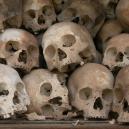
Skulls from a mass grave of Khmer Rouge victims in Choeung Ek, near Phnom Penh, Cambodia
On March 31, after 30 years of impunity, senior members of the bloody Khmer Rouge regime will face their first trial before a United Nations-backed tribunal in Cambodia. The Extraordinary Chambers in the Courts of Cambodia (ECCC), staffed by a mix of international and Cambodian judges, was set up to try the former communist regime's leaders for their alleged crimes during the late 1970s, when forced labor, starvation and the extermination of intellectuals, perceived traitors and anyone deemed useless killed up to one-quarter of Cambodia’s 9 million citizens.
Coordinating the defense team for the ECCC is a British-born lawyer who began his legal career in a far more mundane setting. Daunted by the thought of a dull career defending petty criminals as a barrister in London, Richard Rogers quit his job in the mid-1990s and left for San Francisco, where he became a patent litigator at Coudert Brothers. But his wanderlust and intellectual curiosity drove him to seek out ever more exotic legal landscapes, leading to stints working on international war crimes tribunals in The Hague and several Third World countries.
Rogers now lives and works in Cambodia, where he's helping coordinate legal efforts to bring closure to one of the darkest periods of the country's history. Law.com met with Rogers at his office in Phnom Penh to discuss his unique career and the court's many hurdles.
Cambodia: Pride and compassion
By Esti Frischling
Diamondbackonline.com
It's no secret that wearing intentionally ripped jeans is really a microcosmic manifestation of a person's latent middle-class guilt for being able to afford jeans in the first place. I think that's been pretty much agreed upon by the contemporary pop culture scholarly community. While I've never subscribed to this hobo-chic sensibility, the sentiment has certainly plagued me lately. I'm writing this column from an Internet café in Cambodia, and I'm sure it goes without saying that this country is pretty down in the dumps. Even as well-read (translation: well Wikipedia-ed) as I consider myself to be, I really wasn't prepared to encounter this level of poverty.
It's the first time I've ever experienced something I could honestly describe as gut-wrenching. Little kids approach you at restaurants and beg for the rest of your sandwich, and when you walk down the main thoroughfare of the capital city, there are babies literally sleeping in the street. The slums along the roads are surrounded by moats filled with more trash than their inhabitants could possibly have generated on their limited means, and there are people everywhere missing limbs. All the while, I'm staring out the window of a bus, wistfully listening to depressing music on my iPod (trying to justify the fact that I can even afford an iPod) and consciously not complaining about the glaring lack of air conditioning.
To make my financially fueled guilt complex even more complex, a huge part of traveling in Cambodia is simply trying not to get ripped off. As soon as I crossed the border, the actual government of Cambodia sold me a visa for a hugely inflated price and told me that if I didn't like it, I was welcome to walk back over to Thailand. Afterward, a man charged me $10 for what he promised would be a 20-minute ride in his "cab" to the bus station, which was really only a block away. And you thought tricks were just for kids.
This whole Khmer-traveler dynamic is quite frustrating, but to put it bluntly, they need the money more than we do. So do you just blindly get ripped off and taken for a ride by some mean old fruit lady who sends her little kids off to beg instead of to school? Or alternatively, with the pride of "stupid Americans" everywhere hinging on your bargaining ability, do you haggle down to the last quarter with someone who would genuinely notice if they lost a quarter?
I'm not writing advice anymore, so I'll be the first to tell you - I have no f---ing clue. Personally, I handled it by stealthily sneaking ice cream to child beggars when their parents were forcibly peddling drugs to innocent passersby. Unfortunately, in my lifetime, there probably won't come a time when children aren't forced to work in Southeast Asia, or their agrarian society can yield sustaining amounts of income. Instead of stewing in guilt or donating all of my hard-earned bankroll from The Diamondback, as cheesy as this sounds, sometimes you really do have to settle for a child's chocolate-covered smile ... and, of course, take a prominent role in your campus' activism community and so on and so forth.
Esti Frischling is a sophomore studio art major writing this semester from Thailand. She can be reached at estidbk@gmail.com.
It's no secret that wearing intentionally ripped jeans is really a microcosmic manifestation of a person's latent middle-class guilt for being able to afford jeans in the first place. I think that's been pretty much agreed upon by the contemporary pop culture scholarly community. While I've never subscribed to this hobo-chic sensibility, the sentiment has certainly plagued me lately. I'm writing this column from an Internet café in Cambodia, and I'm sure it goes without saying that this country is pretty down in the dumps. Even as well-read (translation: well Wikipedia-ed) as I consider myself to be, I really wasn't prepared to encounter this level of poverty.
It's the first time I've ever experienced something I could honestly describe as gut-wrenching. Little kids approach you at restaurants and beg for the rest of your sandwich, and when you walk down the main thoroughfare of the capital city, there are babies literally sleeping in the street. The slums along the roads are surrounded by moats filled with more trash than their inhabitants could possibly have generated on their limited means, and there are people everywhere missing limbs. All the while, I'm staring out the window of a bus, wistfully listening to depressing music on my iPod (trying to justify the fact that I can even afford an iPod) and consciously not complaining about the glaring lack of air conditioning.
To make my financially fueled guilt complex even more complex, a huge part of traveling in Cambodia is simply trying not to get ripped off. As soon as I crossed the border, the actual government of Cambodia sold me a visa for a hugely inflated price and told me that if I didn't like it, I was welcome to walk back over to Thailand. Afterward, a man charged me $10 for what he promised would be a 20-minute ride in his "cab" to the bus station, which was really only a block away. And you thought tricks were just for kids.
This whole Khmer-traveler dynamic is quite frustrating, but to put it bluntly, they need the money more than we do. So do you just blindly get ripped off and taken for a ride by some mean old fruit lady who sends her little kids off to beg instead of to school? Or alternatively, with the pride of "stupid Americans" everywhere hinging on your bargaining ability, do you haggle down to the last quarter with someone who would genuinely notice if they lost a quarter?
I'm not writing advice anymore, so I'll be the first to tell you - I have no f---ing clue. Personally, I handled it by stealthily sneaking ice cream to child beggars when their parents were forcibly peddling drugs to innocent passersby. Unfortunately, in my lifetime, there probably won't come a time when children aren't forced to work in Southeast Asia, or their agrarian society can yield sustaining amounts of income. Instead of stewing in guilt or donating all of my hard-earned bankroll from The Diamondback, as cheesy as this sounds, sometimes you really do have to settle for a child's chocolate-covered smile ... and, of course, take a prominent role in your campus' activism community and so on and so forth.
Esti Frischling is a sophomore studio art major writing this semester from Thailand. She can be reached at estidbk@gmail.com.
Garment industry unravels
 Garment workers in Phnom Penh.
Written by Chun Sophal and Hor Hab
Wednesday, 11 March 2009
Phnom Penh Post
January garment revenues down $180m from last year.
Garment exports - the country's chief source of foreign exchange - contracted in January to less than a third of their value compared with the same period last year, the Ministry of Commerce announced Tuesday.
Ministry officials added that January tourist arrivals also dropped 2.19 percent compared with the number of foreign visitors coming to Cambodia 12 months earlier, in a sign that another key economic driver was flagging in the face of the global financial crisis.
Speaking at a charity golf event in Phnom Penh, Minister of Commerce Cham Prasidh said that garment exports generated revenue of only US$70 million in January, compared with $250 million in January 2008, a situation the Ministry of Finance acknowledged was a troubling signal of tough times ahead.
"We recognise that the garment and tourism sectors have been affected to some extent," said Ouk Rabun, a secretary of state at the Ministry of Finance.
Last week the International Monetary Fund (IMF) projected that, after years of growth, Cambodia's gross domestic product would shrink by 0.5 percent this year in the most negative assessment yet of the Kingdom's economic health.
This contraction comes largely due to falling demand for Cambodian garments, the IMF said.
"Garment exports are under pressure due to sharply lower retail demand in the United States and the European Union," the IMF said, adding that the highly uncertain outlook for 2010 was tied to regional and global growth.
Cambodian garments to the US generated 62 percent of total revenue for the sector in 2008, while the EU was the next-largest market at 20 percent of revenue.
Cham Prasidh held out hope that consumers would begin spending money again by the end of the first quarter.
"I hope that garment exports will recover in March because consumers - facing constraints due to the crisis - could resolve their problems and start purchasing again," he said.
However, most analysts have projected a prolonged drop in global demand, a view backed by the Kingdom's garment industry, which is facing increasing uncertainty from buyers.
Officials with the Garment Manufacturers Association of Cambodia [GMAC], which holds accounts with large Western brands - including Gap, Nike and Adidas - said that in previous years orders were placed in October for the 12 months ahead.
But given the downturn, these companies are now placing orders on a monthly basis, GMAC officials said, predicting that things will get worse before they get better.
"We don't know about the purchase orders for the year," said GMAC labour officer Cheath Khemara. "Purchase orders have not dropped to an alarming rate at the moment, but it will be even more serious come June because the effects of the economic downturn will likely have spread by then."
He acknowledged that the big international brands had decreased their orders, but refused to give figures. "I am very worried about this decline in purchase orders," he said.
The Free Trade Union of Cambodia said Monday that more than 20,000 garment workers have already lost their jobs this year, with another 10,000 at risk of becoming unemployed as more garment factories face closure.
Tourism, another pillar of Cambodia's economy, also appears to have had a rough start as fewer people travel, the IMF said, citing "cuts in discretionary spending".
Some 218,691 tourists arrived in Cambodia in January, down from 223,581 visitors during the same period in 2008, Tourism Minister Thong Khon said Tuesday.
"We will track this decline in tourism numbers and will try to prevent a prolonged downturn. We will try to attract short-haul tourists to balance out the decline," Thong Khon said.
Wednesday, 11 March 2009
Phnom Penh Post
January garment revenues down $180m from last year.
Garment exports - the country's chief source of foreign exchange - contracted in January to less than a third of their value compared with the same period last year, the Ministry of Commerce announced Tuesday.
Ministry officials added that January tourist arrivals also dropped 2.19 percent compared with the number of foreign visitors coming to Cambodia 12 months earlier, in a sign that another key economic driver was flagging in the face of the global financial crisis.
Speaking at a charity golf event in Phnom Penh, Minister of Commerce Cham Prasidh said that garment exports generated revenue of only US$70 million in January, compared with $250 million in January 2008, a situation the Ministry of Finance acknowledged was a troubling signal of tough times ahead.
"We recognise that the garment and tourism sectors have been affected to some extent," said Ouk Rabun, a secretary of state at the Ministry of Finance.
Last week the International Monetary Fund (IMF) projected that, after years of growth, Cambodia's gross domestic product would shrink by 0.5 percent this year in the most negative assessment yet of the Kingdom's economic health.
This contraction comes largely due to falling demand for Cambodian garments, the IMF said.
"Garment exports are under pressure due to sharply lower retail demand in the United States and the European Union," the IMF said, adding that the highly uncertain outlook for 2010 was tied to regional and global growth.
Cambodian garments to the US generated 62 percent of total revenue for the sector in 2008, while the EU was the next-largest market at 20 percent of revenue.
Cham Prasidh held out hope that consumers would begin spending money again by the end of the first quarter.
"I hope that garment exports will recover in March because consumers - facing constraints due to the crisis - could resolve their problems and start purchasing again," he said.
However, most analysts have projected a prolonged drop in global demand, a view backed by the Kingdom's garment industry, which is facing increasing uncertainty from buyers.
Officials with the Garment Manufacturers Association of Cambodia [GMAC], which holds accounts with large Western brands - including Gap, Nike and Adidas - said that in previous years orders were placed in October for the 12 months ahead.
But given the downturn, these companies are now placing orders on a monthly basis, GMAC officials said, predicting that things will get worse before they get better.
"We don't know about the purchase orders for the year," said GMAC labour officer Cheath Khemara. "Purchase orders have not dropped to an alarming rate at the moment, but it will be even more serious come June because the effects of the economic downturn will likely have spread by then."
He acknowledged that the big international brands had decreased their orders, but refused to give figures. "I am very worried about this decline in purchase orders," he said.
The Free Trade Union of Cambodia said Monday that more than 20,000 garment workers have already lost their jobs this year, with another 10,000 at risk of becoming unemployed as more garment factories face closure.
Tourism, another pillar of Cambodia's economy, also appears to have had a rough start as fewer people travel, the IMF said, citing "cuts in discretionary spending".
Some 218,691 tourists arrived in Cambodia in January, down from 223,581 visitors during the same period in 2008, Tourism Minister Thong Khon said Tuesday.
"We will track this decline in tourism numbers and will try to prevent a prolonged downturn. We will try to attract short-haul tourists to balance out the decline," Thong Khon said.
Tamil group not a threat in Cambodia
| Written by Cheang Sokha and Brendan Brady | |
| Wednesday, 11 March 2009 Phnom Penh Post | |
| LOCAL and American officials in Phnom Penh have downplayed the threat posed to Cambodia of a nonprofit group with ties to Sri Lanka's separatist Tamil Tigers that has offices around the globe. Spokesman John Johnson said the US government had sent a generic message to all its embassies indicating that the US Treasury had designated the Tamil Foundation, a charity based in the US, as a terrorist group and frozen its assets. He downplayed the threat of the group operating in Cambodia. "We got a note from the Treasury, and it's something we are required to distribute to the local government," he said. "It's just a heads-up. It's not something serious here." Foreign Ministry Secretary of State Long Visalo had forwarded the US embassy notice, delivered on February 18, to the Ministry of Interior as a matter of protocol, said Koy Kuong, who is also a secretary of state at the ministry. "This is just an exchange of information. We do not have a Tamil Foundation in Cambodia," he said. "The US learned that the Tamil Foundation had established offices in other countries so they are seeking international cooperation, but we have not heard of this group operating in Cambodia." Long Visalo could not be reached for comment Tuesday. Kieth Chantharith, spokesman for the National Police, told the Post: "We are still investigating the matter, but this issue is not a major concern. We regularly monitor groups operating in Cambodia to make sure they aren't involved in terrorism." |
Preah Vihear temple has access roads from all directions
 Preah Vihear: The bird's eye view to the left is the plains of Cambodia where the staircases will be constructed leading up to the temple.
everyday.com
10th March, 2009
Translated from Khmer by Khmerization
Preah Vihear temple have access roads from all directions after a temporary paved road has been completed recently. The access roads to Preah Vihear temple will be upgraded, complete with vehicle parking lots.
Mr. Hang Soth, secretary-general of the Preah Vihear Authority, told Reaksmei Kampuchea that, other than constructing an access paved road, the Bayon foundation is in the process of constructing a "reception centre" at the foot of the mountain. He said also that, to the east, the Autority had ordered the constructions of staricases leading to the temple.
The staircases will be built along the ancient stairways and will be cconstructed by using natural rocks. The construction will take a long time to complete, therefore the Authority has ordered the construction of a temporary concrete stairways for temporary usage.
The old staircases, 3,000 in total which was constructed from woods, have deteriorated badly. The new staircases to be built, will be built at the T-junction at the foot of the mountain to the temple. It is 1418 metres in length but the access road to the temple will be widened to 7 metres wide, paved with concrete and complete with a parking lot capable of housing 50 vehicles.
Along these ancient staircases, there will be a plan to build an elephant track for tourist rides.
10th March, 2009
Translated from Khmer by Khmerization
Preah Vihear temple have access roads from all directions after a temporary paved road has been completed recently. The access roads to Preah Vihear temple will be upgraded, complete with vehicle parking lots.
Mr. Hang Soth, secretary-general of the Preah Vihear Authority, told Reaksmei Kampuchea that, other than constructing an access paved road, the Bayon foundation is in the process of constructing a "reception centre" at the foot of the mountain. He said also that, to the east, the Autority had ordered the constructions of staricases leading to the temple.
The staircases will be built along the ancient stairways and will be cconstructed by using natural rocks. The construction will take a long time to complete, therefore the Authority has ordered the construction of a temporary concrete stairways for temporary usage.
The old staircases, 3,000 in total which was constructed from woods, have deteriorated badly. The new staircases to be built, will be built at the T-junction at the foot of the mountain to the temple. It is 1418 metres in length but the access road to the temple will be widened to 7 metres wide, paved with concrete and complete with a parking lot capable of housing 50 vehicles.
Along these ancient staircases, there will be a plan to build an elephant track for tourist rides.
Opposition MP barred from attending the IPU conference

everyday.com
10th March, 2009
Translated by Khmerization
Mrs. Mu Sochua (pictured), MP for the opposition Sam Rainsy Party, said that she was prevented from attending the conference of the Inter-Parliamentary Union (IPU) in the Inter-Continental Hotel in Phnom Penh held on 9th March, 2009. The chief of security who prevented her from entering the building said that he was ordered from the "top" not to let her into the building.
Ms. Mu Sochua said that she received the invitation to attend the conference, but she went to the conference a bit late because she has to attend to the hospital and therefore was unable to receive a badge/pass from the organisers.
Ms. Mu Sochua told Radio Free Asia that the prevention of her from attending the conference is a political harrassment of opposition MPs. She added that it is also an insult to the dignity of an MP and it is sexist because she is a woman.
This is the second time that Ms. Mu Sochua was prevented from attending an international conference in Phnom Penh. In early February, she was prevented from attending a Third Economic Forum orgainsed by the Cambodian Economic Authority, even after the intervention of the German ambassador.
10th March, 2009
Translated by Khmerization
Mrs. Mu Sochua (pictured), MP for the opposition Sam Rainsy Party, said that she was prevented from attending the conference of the Inter-Parliamentary Union (IPU) in the Inter-Continental Hotel in Phnom Penh held on 9th March, 2009. The chief of security who prevented her from entering the building said that he was ordered from the "top" not to let her into the building.
Ms. Mu Sochua said that she received the invitation to attend the conference, but she went to the conference a bit late because she has to attend to the hospital and therefore was unable to receive a badge/pass from the organisers.
Ms. Mu Sochua told Radio Free Asia that the prevention of her from attending the conference is a political harrassment of opposition MPs. She added that it is also an insult to the dignity of an MP and it is sexist because she is a woman.
This is the second time that Ms. Mu Sochua was prevented from attending an international conference in Phnom Penh. In early February, she was prevented from attending a Third Economic Forum orgainsed by the Cambodian Economic Authority, even after the intervention of the German ambassador.
MANSION fit for A KING: A Mansion of Chhum Aphaiwong, The Last Lord-Governor of Battambang
 Chaophraya Abhaibhubejhr (Chhum or Choom Abhaiwongse, (1861 to 1922) was the last Lord-Governor of Battambang province from 1895-1907).
MANSION fit for A KING
The Chaophraya Abhaibhubejhr building has a storied history and remains an architectural jewel
10th March, 2009
By VASANA CHINVARAKORN
Bangkok Post
This is a building inspired by love and loyalty. And for the past century, the ochre-coloured two-story mansion next to the Prachin Buri river has been through a fascinating history of transformations. Named after the original owner, Chaophraya Abhaibhubejhr (Chhum/Choom Abhaiwongse, 1861 to 1922), the baroque-style building was born out of his simple wish to provide a vacation residence fit for a king. Then it was offered as a royal wedding gift, and later turned into a hospital touted to be the country's most beautiful. Now housing a museum on traditional Thai medicine, the picture of its facade has been used as the logo of Thailand's most popular line of herbal products under the brand name of "Abhaibhubejhr".
It all began in 1909. A loyal subject to King Chulalongkorn, Chaophraya Abhaibhubejhr had an opportunity to play host during the former's royal visit to Prachin Buri a year earlier. Due to limited resources at the time - Chaophraya Abhaibhubejhr himself had just relocated his whole family from Cambodia's Battambang to Siam in 1907 - the monarch had to stay in a makeshift pavilion for the entire trip. After the king's departure, Chaophraya Abhaibhubejhr thus decided to initiate the construction project, to build a mansion more fitting for His Majesty, lest he might return to the area again.
Estimated to cost about a million baht, a rather considerable sum at the time, the ambitious scheme recruited the best of designers and craftsmen. A French architectural firm that had been commissioned to build a similar style of building in Battambang while Chaophraya Abhaibhubejhr was still the governor there was rehired; certain high-quality materials unavailable locally like roof and floor tiles, rainwater pipes and a weathercock (with both eyes made of real diamonds, it is reputed) were imported from overseas. It is believed that the builders may have been drawn from French Indochina, as well.
 King Vajiravudh and his royal consort, Phra Nang Chao Suvadhana, formerly Tew Abhaiwongse, on their wedding day.
Despite his best intentions, however, the mansion was completed after King Chulalongkorn's demise in 1910. But Chaophraya Abhaibhubejhr was able to throw a lavish reception on the premises when King Vajiravudh paid him a royal visit two years later. Intriguingly, the building was subsequently presented as a wedding gift when the monarch married one of Chaophraya Abhaibhubejhr's granddaughters, Kruakaew, aka Tew Abhaiwongse, who was appointed Phra Nang Chao Suvadhana (royal consort) in 1924.
It should be noted that up until his final days, Chaophraya Abhaibhubejhr had never made use of the building himself. Ironically, the only occasion came after he passed away, in 1922, with his royally sponsored funeral service being held at the site.
 The century-old Chaophraya Abhaibhubejhr building in Prachin Buri remains a testament to the unwavering loyalty of one man for his beloved monarch. It has been transformed from a vacation residence of Rama VI, who married Chaophraya Abhaibhubejhr’s granddaughter, to a public hospital and now a museum of traditional Thai medicine.
As a tribute to her grandfather, in 1937 Phra Nang Chao Suvadhana decided to donate the building to the Royal Thai Army to be used as a hospital catering to both the military and the local public. Four years later, it was transferred to the Ministry of Public Health, which named it the Prachin Buri Hospital. The present name of Chaophraya Abhaibhubejhr Hospital was unanimously voted on by the provincial council in 1966.
 The first phase of restoration began in 1970, when then hospital director Dr Sujin Palakornkul deemed it necessary to return the building to as near the original condition as possible. From then on, it was used only for special occasions such as to receive members of the royal family and, interestingly, to host the wedding parties of hospital staff. In 1990, the Fine Arts Department registered the building as a heritage site.
 Pharmacist Supaporn Pitiporn.
Substantial repair work did not take place, however, until well into the mid-'90s. In 1994, pharmacist Supaporn Pitiporn pioneered the task, with support from then-director Dr Prem Chinvanthananond. Despite the initial difficulty of fund-raising, the mission was finally accomplished - the first building of Chaophraya Abhaibhubejhr Hospital was restored to its former grandeur. In 1999, it won an award for the best architectural design (building category) from HRH Princess Maha Chakri Sirindhorn.
 But a building is more than a combination of bricks and tiles. For years, Supaporn has been researching Chaophraya Abhaibhubejhr's life and the more she learns, the more she grows to admire his calibre and loyalty to his king. "This is a person who was willing to leave everything for the sake of his country." Supaporn refers in particular to the historic juncture in 1907 when Siam was forced to cede its control over Siem Riep, Sisophon and Battambang in return for the coastal towns of Trat and Chantaburi. Chaophraya Abhaibhubejhr decided to return to Siam despite an offer by the French colonial power that he could remain the governor of Battambang and adjacent areas if he wished.
 Supaporn thus views her work at the hospital, promoting knowledge and use of traditional Thai medicine, as an effort to carry on Chaophraya Abhaibhubejhr's spirit. A century ago, the man stood up to defy the foreign powers. Now, it is to keep national "sovereignty" from the multinational pharmaceutical industry with its patent-oriented regime.
 "So there is a continuation between the legacies of Chaophraya Abhaibhubejhr and us his descendants. We respect him because we understand, appreciate, what he tried to do throughout his life. Our hope is only that we will be able to be completely self-reliant in terms of producing our own [herbal] medicine for our needs, one day."
Were Chaophraya Abhaibhubejhr still alive, he would be tremendously pleased.
10th March, 2009
By VASANA CHINVARAKORN
Bangkok Post
This is a building inspired by love and loyalty. And for the past century, the ochre-coloured two-story mansion next to the Prachin Buri river has been through a fascinating history of transformations. Named after the original owner, Chaophraya Abhaibhubejhr (Chhum/Choom Abhaiwongse, 1861 to 1922), the baroque-style building was born out of his simple wish to provide a vacation residence fit for a king. Then it was offered as a royal wedding gift, and later turned into a hospital touted to be the country's most beautiful. Now housing a museum on traditional Thai medicine, the picture of its facade has been used as the logo of Thailand's most popular line of herbal products under the brand name of "Abhaibhubejhr".
It all began in 1909. A loyal subject to King Chulalongkorn, Chaophraya Abhaibhubejhr had an opportunity to play host during the former's royal visit to Prachin Buri a year earlier. Due to limited resources at the time - Chaophraya Abhaibhubejhr himself had just relocated his whole family from Cambodia's Battambang to Siam in 1907 - the monarch had to stay in a makeshift pavilion for the entire trip. After the king's departure, Chaophraya Abhaibhubejhr thus decided to initiate the construction project, to build a mansion more fitting for His Majesty, lest he might return to the area again.
Estimated to cost about a million baht, a rather considerable sum at the time, the ambitious scheme recruited the best of designers and craftsmen. A French architectural firm that had been commissioned to build a similar style of building in Battambang while Chaophraya Abhaibhubejhr was still the governor there was rehired; certain high-quality materials unavailable locally like roof and floor tiles, rainwater pipes and a weathercock (with both eyes made of real diamonds, it is reputed) were imported from overseas. It is believed that the builders may have been drawn from French Indochina, as well.
 King Vajiravudh and his royal consort, Phra Nang Chao Suvadhana, formerly Tew Abhaiwongse, on their wedding day.
Despite his best intentions, however, the mansion was completed after King Chulalongkorn's demise in 1910. But Chaophraya Abhaibhubejhr was able to throw a lavish reception on the premises when King Vajiravudh paid him a royal visit two years later. Intriguingly, the building was subsequently presented as a wedding gift when the monarch married one of Chaophraya Abhaibhubejhr's granddaughters, Kruakaew, aka Tew Abhaiwongse, who was appointed Phra Nang Chao Suvadhana (royal consort) in 1924.
It should be noted that up until his final days, Chaophraya Abhaibhubejhr had never made use of the building himself. Ironically, the only occasion came after he passed away, in 1922, with his royally sponsored funeral service being held at the site.
 The century-old Chaophraya Abhaibhubejhr building in Prachin Buri remains a testament to the unwavering loyalty of one man for his beloved monarch. It has been transformed from a vacation residence of Rama VI, who married Chaophraya Abhaibhubejhr’s granddaughter, to a public hospital and now a museum of traditional Thai medicine.
As a tribute to her grandfather, in 1937 Phra Nang Chao Suvadhana decided to donate the building to the Royal Thai Army to be used as a hospital catering to both the military and the local public. Four years later, it was transferred to the Ministry of Public Health, which named it the Prachin Buri Hospital. The present name of Chaophraya Abhaibhubejhr Hospital was unanimously voted on by the provincial council in 1966.
 The first phase of restoration began in 1970, when then hospital director Dr Sujin Palakornkul deemed it necessary to return the building to as near the original condition as possible. From then on, it was used only for special occasions such as to receive members of the royal family and, interestingly, to host the wedding parties of hospital staff. In 1990, the Fine Arts Department registered the building as a heritage site.
 Pharmacist Supaporn Pitiporn.
Substantial repair work did not take place, however, until well into the mid-'90s. In 1994, pharmacist Supaporn Pitiporn pioneered the task, with support from then-director Dr Prem Chinvanthananond. Despite the initial difficulty of fund-raising, the mission was finally accomplished - the first building of Chaophraya Abhaibhubejhr Hospital was restored to its former grandeur. In 1999, it won an award for the best architectural design (building category) from HRH Princess Maha Chakri Sirindhorn.
 But a building is more than a combination of bricks and tiles. For years, Supaporn has been researching Chaophraya Abhaibhubejhr's life and the more she learns, the more she grows to admire his calibre and loyalty to his king. "This is a person who was willing to leave everything for the sake of his country." Supaporn refers in particular to the historic juncture in 1907 when Siam was forced to cede its control over Siem Riep, Sisophon and Battambang in return for the coastal towns of Trat and Chantaburi. Chaophraya Abhaibhubejhr decided to return to Siam despite an offer by the French colonial power that he could remain the governor of Battambang and adjacent areas if he wished.
 Supaporn thus views her work at the hospital, promoting knowledge and use of traditional Thai medicine, as an effort to carry on Chaophraya Abhaibhubejhr's spirit. A century ago, the man stood up to defy the foreign powers. Now, it is to keep national "sovereignty" from the multinational pharmaceutical industry with its patent-oriented regime.
 "So there is a continuation between the legacies of Chaophraya Abhaibhubejhr and us his descendants. We respect him because we understand, appreciate, what he tried to do throughout his life. Our hope is only that we will be able to be completely self-reliant in terms of producing our own [herbal] medicine for our needs, one day."
Were Chaophraya Abhaibhubejhr still alive, he would be tremendously pleased.
Nearly 80 percent of Cambodians live under poverty line
KHMER INTELLIGENCE NEWS
10 March 2009
Nearly 80 percent of Cambodians live under poverty line (2)
Government and aid officials claim that the percentage of Cambodians living below the poverty line dropped from 47% to 35% between 1996 and 2006. The fact is that, during that period, the "poverty line" used to assess the number of poor people and defined as a threshold of daily income, was surreptitiously lowered from US$1.00 to US$0.75. Had the "poverty line" not been changed, the percentage of Cambodians living with less than US$1.00 a day would be close to 50%. Moreover, had the "poverty line" been set at US$2.00 income a day as it is in the Philippines and some African countries, the percentage of Cambodians considered as poor would be 77.7% according to the UNDP. See "Over 75 percent of Cambodians live under poverty line" (KI News, 13 January 2008).
Poverty to worsen in 2009 (2)
Given the population increase, inequality in revenue distribution and gross misallocation of resources in Cambodia, a minimum 5 percent annual GDP growth is required to prevent poverty from worsening. For 2009, the IMF has predicted that Cambodia's economy would shrink by 0.5%, meaning a negative growth leading to a marked increase in poverty.
Sharp drop in customs revenue (2)
In the 2008 state budget, the Customs Department accounted for over 60 percent of all tax revenue, which is a relatively high figure in the region. For 2009, it should collect US$585 million, a figure that now looks impossible to achieve given the ongoing economic slowdown.
For the first two months of 2009, customs revenue reached only US$64 million compared to US$86 million for the same period last year, which represents a 25 percent drop [adjusted for the exceptional payment of a US$7 million duty pertaining to 2008].
Downward revision of the budget for 2009 (2)
The government will soon be obliged to revise downward the state budget for 2009 that was adopted last December because it is unable to collect the projected revenue. See above news "Sharp drop in customs revenue" but the fall in revenue is also true for other sources of income. The projected 2009 budget amounts to US$1.75 billion compared to US$1.37 billion for the 2008 budget, representing a 28 percent increase. This 28 percent increase will likely evaporate. Cambodia is facing the world economic crisis with a normal budget that can hardly be implemented, let alone a special budget with an appropriate economic rescue package.
Cambodia losing competitiveness because of its dollarized economy (2)
A dollarized economy puts Cambodia in a weak position in the face of the global economic crisis. The fact that Cambodia's currency, the riel, is pegged to the US dollar is putting pressure on its economic competitiveness as its neighbors' currencies (Thai baht, Vietnamese dong) depreciate vis-à-vis the US dollar. Little can be done about this in the short term since 95 percent of Cambodia's money supply consists of US dollars. Paradoxically for the poorer country, the cost of living is higher in Cambodia than in Thailand and Vietnam. For instance, a factory worker can live on a monthly salary of US$60 in Vietnam but not in Cambodia. Cambodia's economy has been dollarized as a result of weak economic foundations and poor governance.
_ _ _ _ _ _ _ _ _ _ _ _ _ _ _ _ _ _ _ _ _ _ _ _ _ _ _ _ _ _ _ _ _
ARCHIVES
13 January 2008
Over 75 percent of Cambodians live under poverty line (1)
According to the latest official statistics, 35 percent of Cambodians live below the "national poverty line", which is defined as $0.75 of income a day. But if the poverty line is raised to $2 a day, which is the level used to measure poverty in most developing countries in Asia and Africa, 77.7 percent of Cambodia's population live under this more realistic poverty line. The 35 percent of Cambodians identified above through our "national poverty line", are actually those who survive under a "starvation line" of $0.75 a day.
Source: 2007/2008 Reports, Human Development Reports, UNDP.
PM tells unemployed workers of Cambodian to return to agriculture
 Garment factory workers.
PHNOM PENH, March 10 (Xinhua) -- Unemployed factory workers can return to agriculture to guarantee better crops supply for the kingdom, national media on Tuesday quoted Cambodian Prime Minister Hun Sen as telling a recent meeting.
Closure of factories has led to mass unemployment, but workers can still find their livelihood in the rural areas as Cambodia is a country rooted in agriculture, Chinese-language newspaper the Sinchew Daily quoted him as saying.
"Unemployment hasn't caused very big crisis for our country," because people still have large fields to plant crops and fruit trees, he said.
If more people return to villages for plantation, Cambodia can have better crops supply, he said.
Meanwhile, Cambodia is also expecting EU, U.S., China, Japan and South Korea to revitalize their economies as soon as possible, thus becoming capable to help the kingdom develop itself, he added.
According to local reports, at least 80 garment factories have been closed in Cambodia since the global financial crisis occurred at the end of last year.
Some 19,000 people have lost their jobs in the garment sector so far and more are expected later this year, the International Labor Organization (ILO) said in February.
Garment is the kingdom's foremost pillar industry. Meanwhile, Cambodia is also a major rice exporter in the region beside the Mekong River.

Trial on trial
 Nuon Chea, Brother No. 2, reacted to the court's decision not to release him on bail.
KHMER ROUGE TRIBUNAL

Published: March 10, 2009

The latest revelations about alleged misconduct and corruption at the Khmer Rouge tribunal have startled even its most jaded critics. Indeed, the nature of this dirty laundry suggests that the UN-backed tribunal is so deeply flawed that its very existence needs to be reevaluated.
Corruption allegations are unfortunately nothing new at the Extraordinary Chambers of the Courts of Cambodia, or ECCC. Since 2006 there have been repeated calls by watchdog groups for an investigation into media reports that Cambodian staff and judges at the ECCC had to pay up to 30 percent of their salary to get and keep their job.
In 2008, several Cambodian whistle-blowers filed complaints with UN staff members alleging corruption at the tribunal. The UN carried out a review of these complaints, and in August 2008 sent a report directly to the Cambodian government. The UN has refused to make public the results of its review, and no details of the underlying allegations have been made public. The Cambodian government, predictably, dismissed the allegations out-of-hand as "unsubstantiated," and rejected the authority of the UN to investigate Cambodian nationals.
In January, the defense team representing Nuon Chea, "Brother No. 2," filed a complaint with the municipal court in Phnom Penh claiming that unresolved allegations of corruption violated their client's right to a fair trial. The complaint mentioned two senior Cambodian tribunal administrators - Keo Thyvuth, the former chief of personnel, and Sean Visoth, the head of administration. Predictably, the municipal court refused to act on the complaint.
The report of a delegation from the German Parliament that visited the tribunal in October 2008 raises serious new questions about the nature of the corruption, as well as what the UN knew and when.
In that report - available online at the Bundestag's Web site until apparently being removed on Feb. 25 - the delegates described a meeting with Knut Rosandhaug, deputy director of administration at the ECCC, during which he indicated that the UN had investigated Sean Visoth and "had come to the conclusion that he is guilty of corruption."
This is an extraordinary assertion, which, if true, goes to the very heart of the tribunal. Sean Visoth, director of the Office of Administration, is the most senior Cambodian administrator at the tribunal. In August 2008, he promised to resign if ever found guilty of corruption. He is currently on medical leave.
A presumption of innocence is a cornerstone of justice, and it would be inappropriate to rush to judgment on Sean and assume that the comments reportedly made by Rosandhaug - even if they were in fact made - are in fact accurate. The Bundestag report is hearsay and cannot be used as proof of the truth of the statements alleged to have been made by Rosandhaug.
Nevertheless, the allegations are extremely serious and must be addressed. To this point the Cambodian authorities have routinely dismissed as "unverified" all allegations of corruption that have been brought to their attention. But now the chief Cambodian administrator at the tribunal is implicated by name in the parliamentary report of a donor nation, and that requires clear, thorough and independent review by a competent investigative body.
One thing is clear: The recently agreed-upon mechanism to investigate corruption at the ECCC is woefully inadequate and falls far short of being the competent body required to instill confidence and adequately undertake this important task.
On Feb. 23, the UN and the Cambodian government announced that they had agreed upon parallel but autonomous national and international mechanisms to receive complaints regarding wrongdoing at the tribunal, which would apparently give the Cambodians power to veto any joint investigations of Cambodian staff or administrators.
A system where each side handles the complaints of its own staff has already been tried and has failed at the tribunal. The Open Society Justice Initiative, a nongovernmental organization, has criticized the new parallel mechanism as being merely a continuation of the failed current policy while doing "nothing to alter the de facto Cambodian government veto, which has stymied genuine investigations of corruption to date."
Can we trust Cambodian appointees to honestly investigate allegations of corrupt practices by senior Cambodian administrators? Surely not, given the perception of political influence and widespread corruption within the Cambodian judicial system.
What is urgently needed is a demonstrably trustworthy investigative mechanism - one free from possible manipulation by Cambodian appointees. Ideally such a mechanism should be independent, with judicial authority and with broad-ranging investigative powers. One option would be to hire an experienced auditing company to conduct a review, with a public report made to the tribunal's judges, containing recommendations for the filing of criminal charges in the municipal court if warranted.
The Bundestag report also suggests disturbing questions about what the UN knew and when, and raises the specter that the UN has once again been complicit in keeping secret the wrongdoings of senior Cambodian tribunal staff.
This would not be the first time that the UN has been accused of covering up evidence of Cambodian misdeeds at the ECCC. In 2007, the UN Development Program attempted, unsuccessfully, to keep secret the report of independent auditors that had found evidence of such serious flaws in the hiring practices at the tribunal that they recommended the wholesale firing of all Cambodian tribunal staff.
Given the history of allegations about corrupt practices at the tribunal and the level of skepticism and distrust evident amongst donors, civil society and monitors, surely a policy of full disclosure is called for? Leaked reports can seriously undermine credibility, and credibility is a commodity in short supply at the moment in Phnom Penh.
The problem is not so much the whiff of corruption but rather that the UN refuses to deal with it in a direct, transparent and credible way that enhances the credibility of the court.
John A. Hall, a professor at the Chapman University School of Law, in Orange, California, has carried out extensive human rights fieldwork in Cambodia.
Tuesday, 10 March 2009
International parliamentarians gather to discuss peace-building
| Written by Sam Rith | |
| Tuesday, 10 March 2009 Phnom Penh Post | |
| Opposition lawmaker Mu Sochua excluded from Monday's conference on the role of parliaments in building peaceful, stable societies.  Photo by: HENG CHIVOAN Senate and CPP President Chea Sim at a conference on Monday. A REGIONAL seminar to boost the role of parliaments in building peaceful and sustainable societies began Monday in Phnom Penh. The three-day seminar aims at strengthening the abilities of parliaments to resolve disputes and to promote peace and national reconciliation. In his opening address, Chea Sim, president of the Cambodian Senate, said Cambodia's legislative bodies had actively contributed to the government's efforts to integrate into regional and international frameworks by ratifying treaties - particularly as a member of the Association of Southeast Asian Nations, the World Trade Organization and the UN. "We cooperate ... to fulfil the obligations of our state in extensive regional and international cooperation in the age of globalisation, especially in the battles against drugs, cross-border crimes and terrorism," Chea Sim said. The seminar includes members of parliaments from Cambodia, China, Indonesia, Laos, Malaysia, the Philippines and Vietnam. Other participants include members of the Inter-Parliamentary Union [IPU] and representatives of the Cambodian government. Ngo Anh Dzung, a member of the IPU and of Vietnam's National Assembly, said he was pleased the seminar offered a further opportunity to improve the IPU's cooperation with Cambodia's parliament. Ngo told delegates that every post-conflict situation was different, but said: "In many instances, authorities came up against the same moral, social, economic and political problems once the weapons had been laid down". "Peace negotiations and agreements are only the starting point for a long-term process to rebuild society," he said, adding that parliaments had great potential to bring people closer and could prove important as mediating bodies. Opposition lawmaker Mu Sochua, who was prevented from entering the seminar by the head of security after organisers failed to provide a badge for her, said it was highly ironic that she had been shut out of a meeting that was billed as promoting dialogue and dispute resolution. "I am disgusted by this. If I were from the Cambodian People's Party, I would have been allowed in," she said. "Do you think [ruling party MP] Cheam Yeap would have been barred for that? Of course not. They would have rolled out a red carpet for him. It is not equality before the law." Chheang Vun, a member of the National Assembly, said no country or region would be happy living in a world where just a few nations lived in peace and prosperity while the majority remained victims of domestic strife or war. "On behalf of the delegates of the National Assembly of Cambodia ... I am glad to be ... discussing and sharing experiences related to the issues we have faced, especially in relation to the issues of reconciliation and peace-building," he said. |
Subscribe to:
Posts (Atom)